

Route 02 · Dali to Lijiang | Where people live between mountains and rivers
Between mountains and water, the ways people live.
Dali · Xizhou · Shaxi · Lijiang · Tiger Leaping Gorge · Shangri-La | 10 days · 9 nights
Between mountains and water, life is lived in the details.
From Erhai Lake to the Jinsha River, from Bai villages to the Tibetan plateau, this journey travels north and climbs higher, crossing communities, beliefs and changing altitudes.
In Dali, discover how landscape enters daily life. In Xizhou, stay among Bai courtyards. In Shaxi, meet a market town surviving on the Tea-Horse Road. In Lijiang, read watercourses and lanes; in Tiger Leaping Gorge, encounter the force of river and canyon; finally, step into the open highlands of Shangri-La.
What you see is not only mountains and old towns, but how people make a life between mountains and water.
The route
The way through
01Dali | Mountains and water as daily life
Homes / villages / landscape / BenzhuDali · Mountains and water as daily life
Rather than beginning with the beauty of Cangshan and Erhai, see how the landscape enters everyday life.
Dali’s days are framed by Cangshan Mountain and Erhai Lake. Bai families live close to water; courtyard screen walls, village guardian temples, fieldwork and the evening glow all share the same landscape. There is no need to hurry to tick off sights after arriving. Follow the ecological lakeside corridor slowly, and first let yourself enter this rhythm.
Four places between mountain and lake
04 places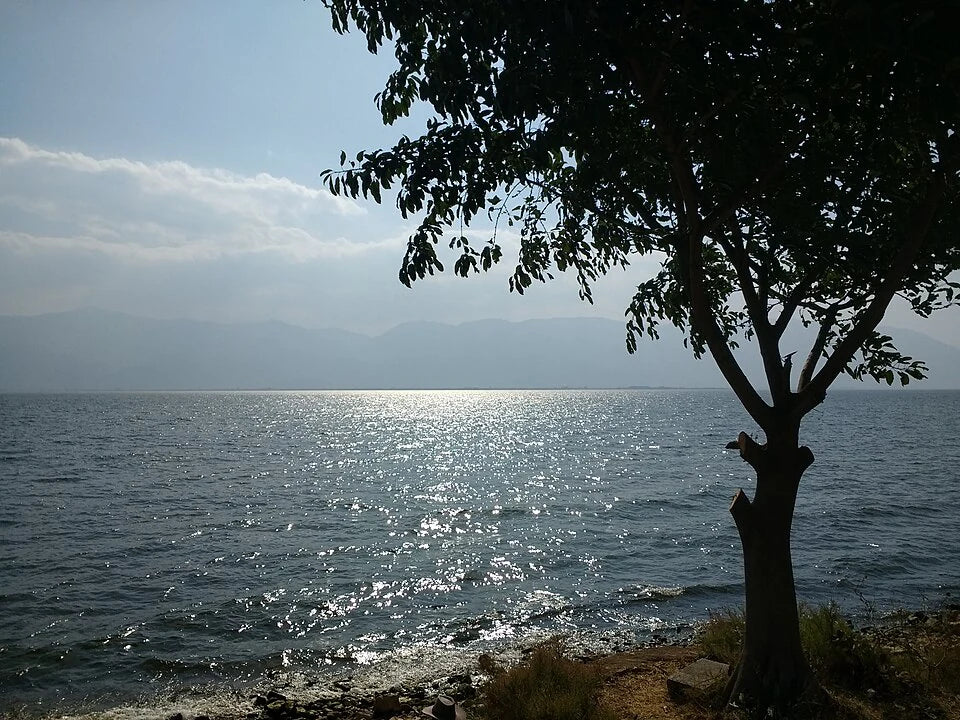
Erhai ecological corridor
Cycling and walking link villages and wetlands along the lakeshore.
Photo: Mx. Granger · CC0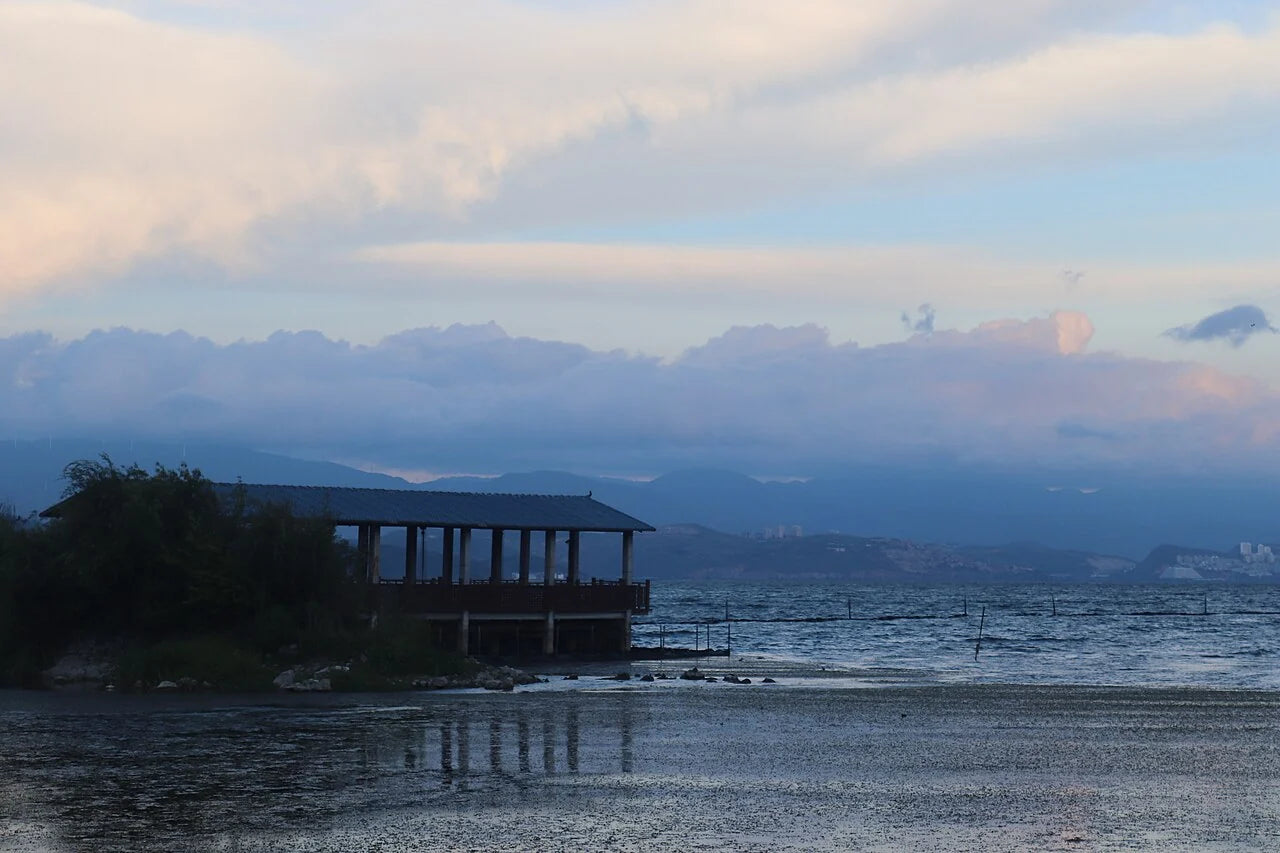
Caicun Pier
Morning gold on Erhai and small fishing boats.
Photo: Liuxingy · CC BY-SA 4.0
The heights of Cangshan
Clouds gather around nineteen peaks, with Erhai shining like a mirror below.
Photo: ZhaoScorpio · CC BY-SA 2.0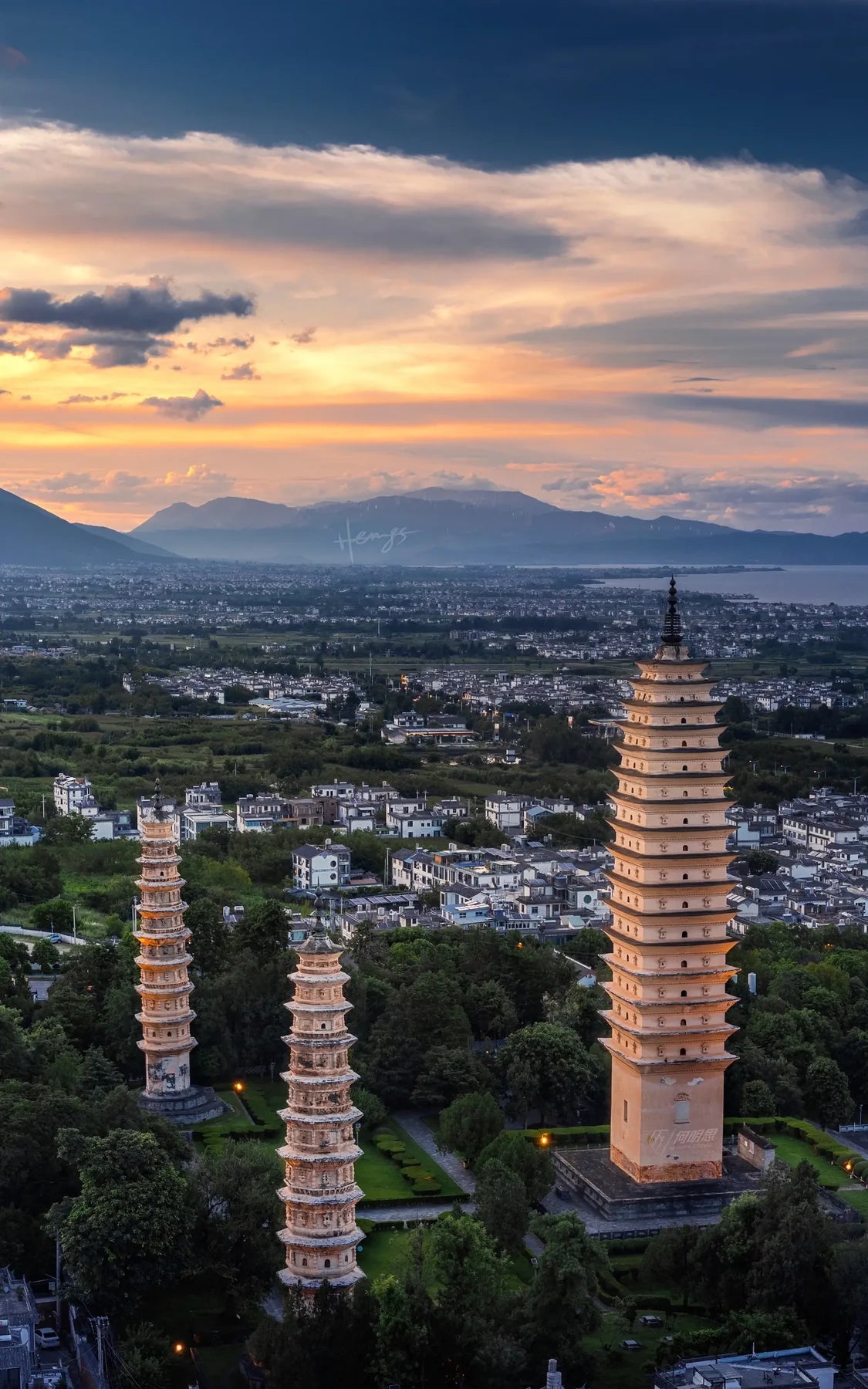
The Three Pagodas of Chongsheng Temple
Pagodas reflected in water, with Cangshan as their backdrop.
Photo: YunLore-authorized photography · Used with permissionCourtyard homes and the village guardian
02 stories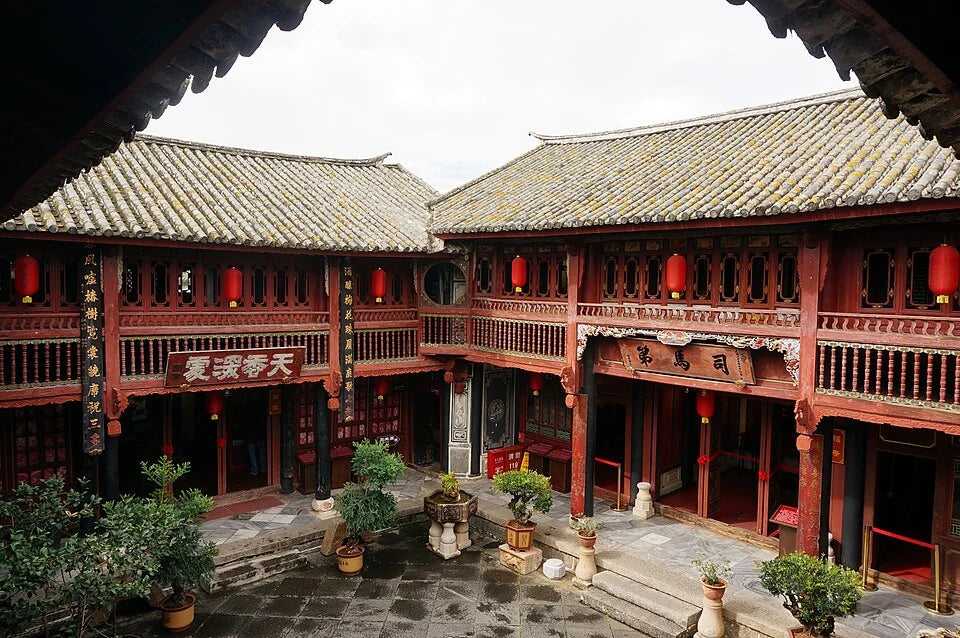
Three wings and a screen wall
Traditional Bai homes follow arrangements known as “three wings and one screen wall” or “four sides and five courtyards”. Family teachings and auspicious words decorate the screen wall; flowers, trees and carved doors surround the courtyard. A single home holds the domestic order of generations.
Photo: 猫猫的日记本 · CC BY-SA 4.0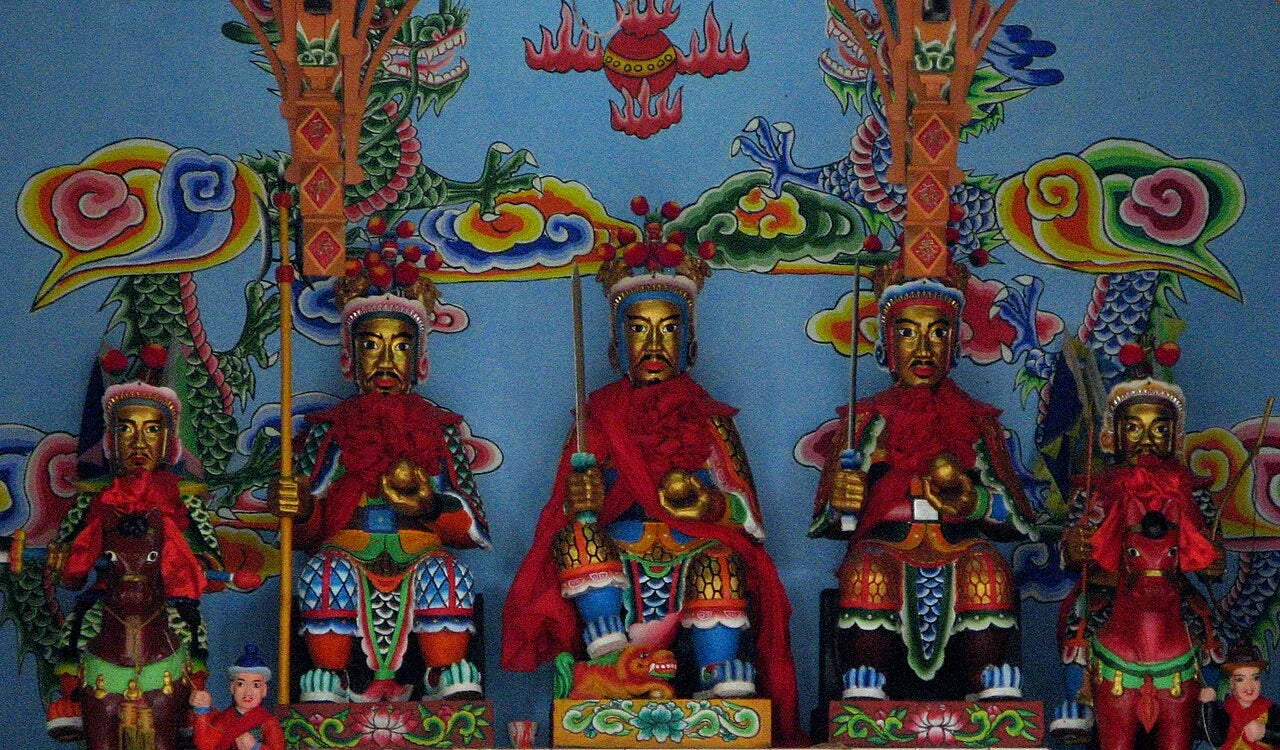
Every village has its own Benzhu
Benzhu are the guardian deities of Bai villages, each with a particular story. At festivals, villagers bring incense and offerings, invite theatre performances and pray for favourable weather. Belief is not far above daily life: it belongs within the village community.
Photo: G41rn8 · CC BY-SA 4.0Three tastes of Dali
03 tastes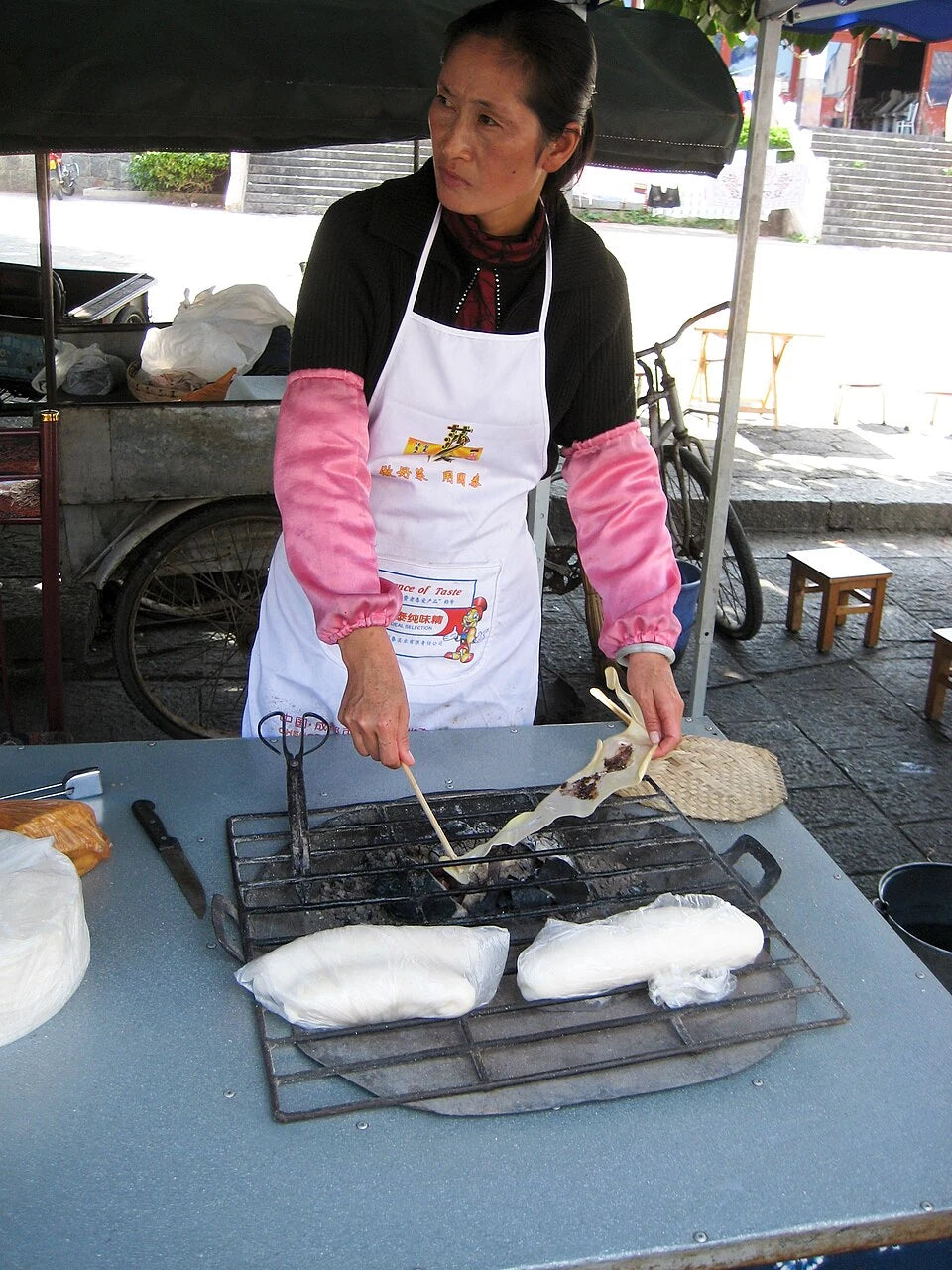
Grilled rushan milk fan
This Bai milk product bubbles and curls on the grill before receiving a layer of rose jam. Milky richness meets floral sweetness in a familiar Dali street snack.
Photo: rduta · CC BY 2.0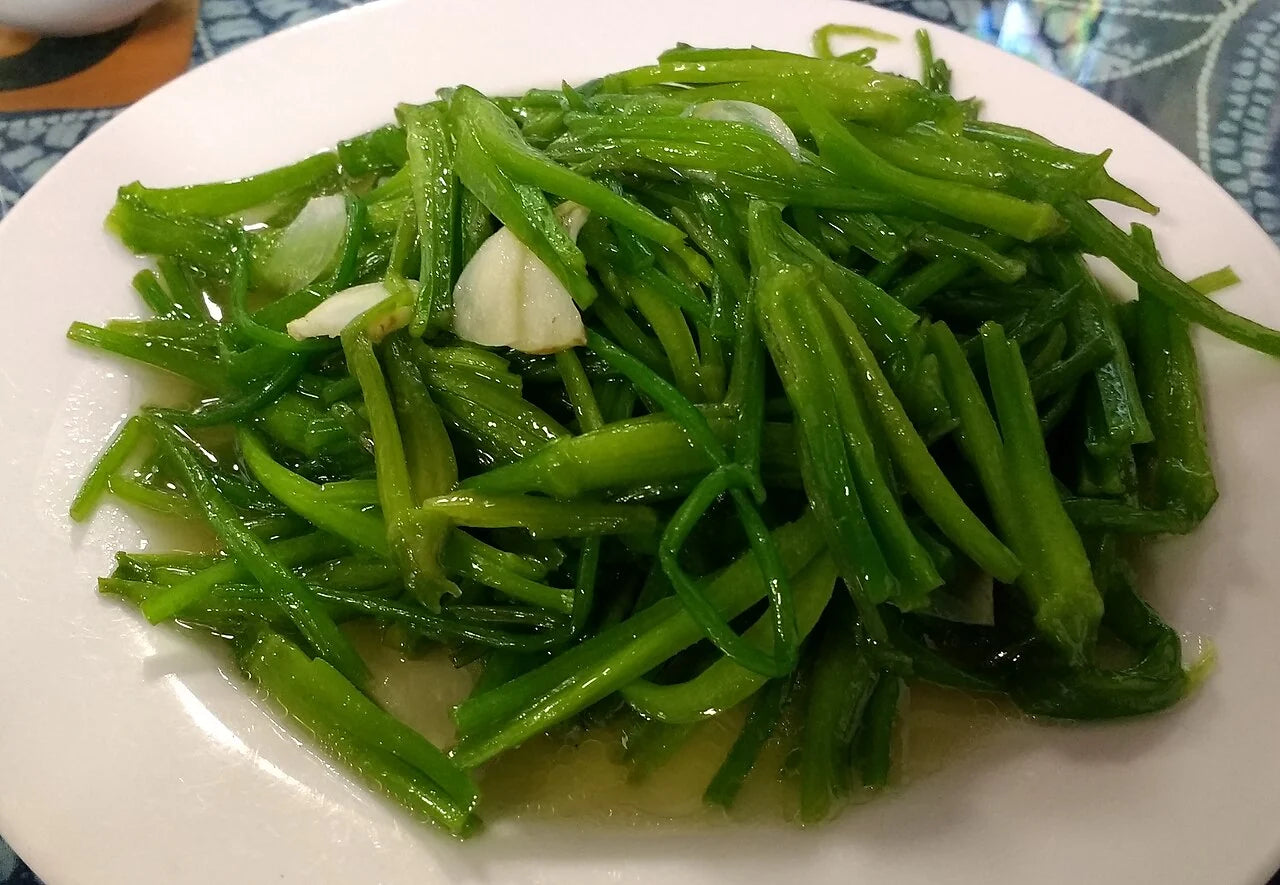
Stir-fried water flowers
Haicaihua water flowers grow only in clean water. Quickly stir-fried, their stems remain crisp and their blossoms delicate: a seasonal vegetable offered by Erhai.
Photo: Mx. Granger · CC0Dali sour-and-spicy fish
Erhai fish is cooked with sour papaya and dried chilli into a bright red, appetising broth. A Bai household favourite, with different lakeside villages making it their own way.
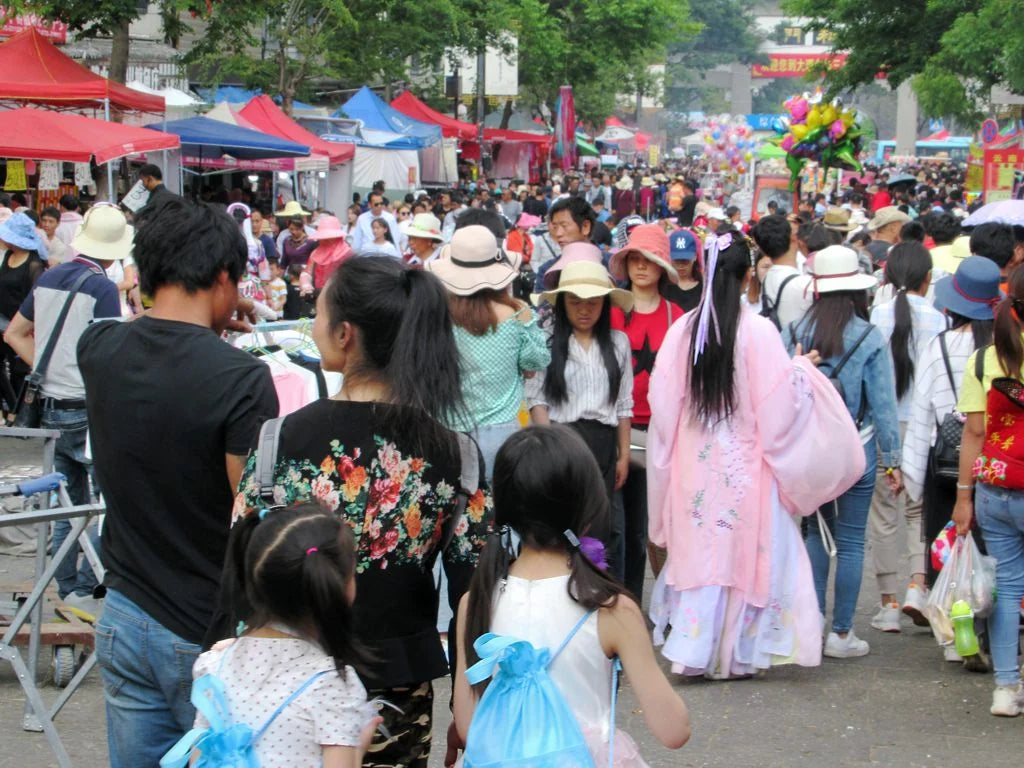
Sanyuejie · The thousand-year fair
Tradition traces Sanyuejie to the Tang dynasty. This grand annual Bai fair embodies the saying, “A thousand years of gathering at one market; one market gathering for a thousand years.” In the third lunar month, communities arrive in festive dress west of Dali Old Town for horse racing, antiphonal singing and trading.
The bustle of the Tea-Horse Road continues in the present.
West of Dali Old Town · National intangible cultural heritage (folk customs) · Horse racing, antiphonal singing and trade.The first and second days
Day 1 Arrive in Dali
- Plan
- Airport or station collection and check-in. Take an easy walk along the ecological corridor or around your hotel.
- Transport
- Seven-seat business vehicle for airport or station collection; timing follows your arrival details.
- Stay
- Dali ecological corridor: Yunqi · Dali or Huaman Seaview. Shuanglang: Tinghuatang, Hushan Yunyin or Muxi Dali.
Day 2 An unhurried day in Dali
- Plan
- Experiences around the Erhai ecological corridor: cycling, lakeside villages and a relaxed rhythm.
- Transport
- Local short-distance journeys; detailed timings to be arranged.
- Stay
- Dali: Yunqi · Dali or Huaman Seaview Resort Hotel.
02Xizhou | The Bai courtyard
Courtyards / merchants / rice fields / tie-dyeXizhou · The Bai courtyard
Step from the landscape into a home, and see how a courtyard contains Bai life.
Xizhou is the home of Bai merchant families, with white-walled, grey-tiled courtyards unfolding around Sifang Street. Away from the bustle of Dali Old Town, families grow flowers, make baba pastries and dry grain in their courtyards. Rice fields turn green in spring and gold in autumn, while the yellow walls of Xilinyuan remain at their edge.
Four places in the home of the merchants
04 places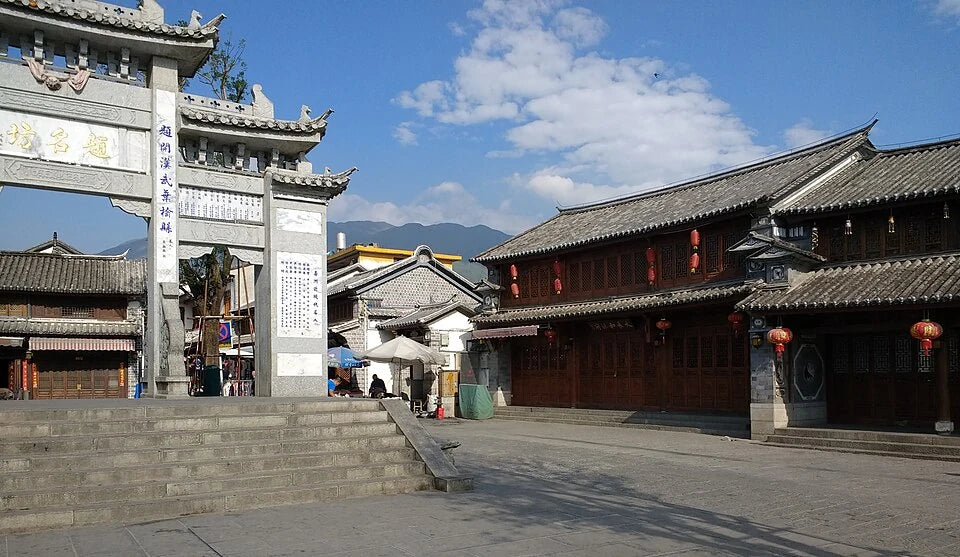
Sifang Street
The old Bai merchants’ street, alive with everyday trade.
Photo: Mx. Granger · CC0Yan Family Compound
A former merchant residence built around four sides and five courtyards.
Photo: 猫猫的日记本 · CC BY-SA 4.0
The Corner House
The rounded building that has become an old-street landmark.
Photo: Yangpeifu · CC0
Xizhou rice fields
Xilinyuan’s yellow walls and the mountains beyond.
Photo: YunLore-authorized photography · Used with permissionCarved doors and daily life in the courtyard
02 stories
A living museum of Bai homes
Xizhou preserves more than a thousand Bai houses. Three wings and a screen wall, four sides and five courtyards, carved doors and painted walls show extraordinary care. Each brick and tile reflects Bai craftsmanship and the aesthetics of merchant households.
Photo: Kcx36 · CC BY-SA 4.0
A Bai household in the courtyard
The courtyard is the centre of the home. Women work, elders sit in the sun and children run about; flowers grow beneath the screen wall. Life unfolds within this open square, day after day.
Photo: Kcx36 · CC BY-SA 4.0Three tastes of Xizhou
03 tastes
Xizhou flaky baba
A charcoal-fired hanging oven bakes these layered pastries. Savoury versions hold minced meat and sweet versions brown sugar; the crust is crisp and the inside flakes into layers. This is Xizhou’s best-known bite.
Photo: Mx. Granger · CC0
Cold chicken rice noodles
Fine rice noodles, hand-shredded chicken, peanuts and coriander receive a sweet-and-sour sauce. A refreshing, appetite-awakening bowl on a hot day.
Photo: Alpha from Melbourne, Australia · CC BY-SA 2.0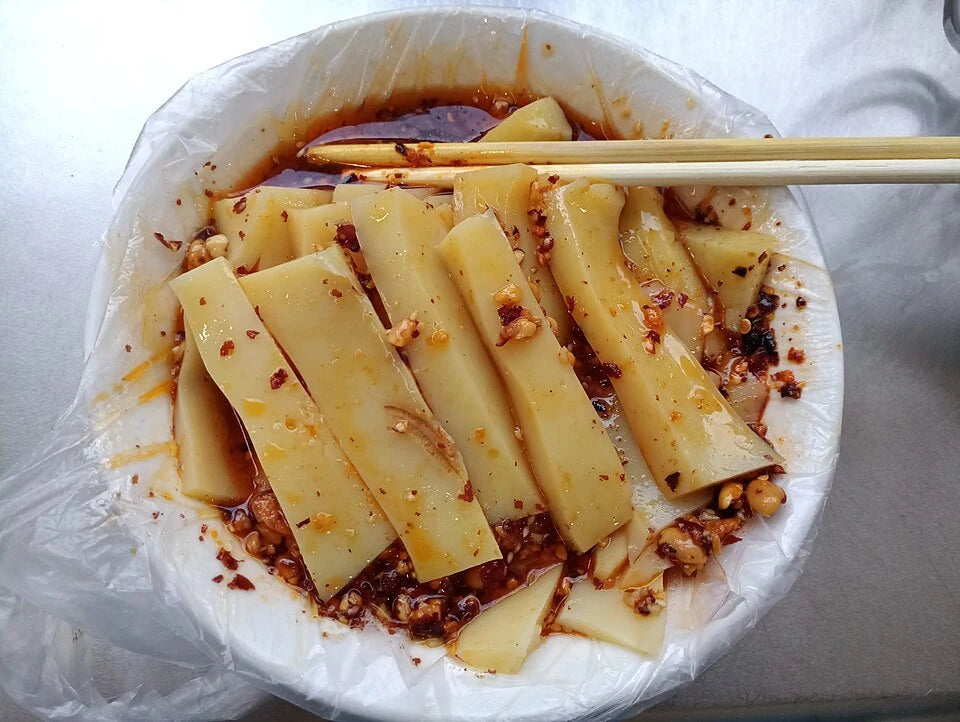
Xizhou pea jelly
Peas are ground into a jelly, cut into pieces and dressed with chilli oil, vinegar and garlic. Smooth, tangy and spicy, it is a familiar cool snack on Bai streets.
Photo: 瑞丽江的河水 · CC BY-SA 4.0
Bai tie-dye · Indigo and white
Zhoucheng, part of Xizhou, is a centre of Bai tie-dye. Makers tie patterns into white cloth with thread, dip it repeatedly into an indigo vat, then remove the stitches to reveal pale motifs against blue.
Tying, dyeing, drying and other stages form more than a dozen steps in a single piece.
Zhoucheng, Xizhou, Dali · National intangible cultural heritage (traditional craftsmanship) · Plant-indigo dyeing creates blue-and-white patterns.The third day
Day 3 Dali → Xizhou
- Plan
- Discover Bai architecture and the old town. A rice-field visit or tie-dye experience can be arranged.
- Transport
- Dali to Xizhou: approximately 40 minutes.
- Stay
- Xizhou: Xingzhe Shangju, Xiduo Jian · Linwu Niao, Tu Ge Qingjing, Jixi, Yin Guesthouse or Dong Family Compound.
03Shaxi | A pause on the Tea-Horse Road
Caravans / old markets / hearths / slowing downShaxi · A pause on the Tea-Horse Road
Enter a town held by time, and slow your steps.
Shaxi’s Sideng Street is described in the source itinerary as the only surviving old market on the Tea-Horse Road. Red sandstone paving, an old theatre stage and ancient trees stand beside the Heihui River, flowing under Yujin Bridge. The caravans’ hoofbeats have faded, but the town keeps its own rhythm. This is a place to do very little: share a pot of beef beside a hearth and watch the morning mist lift from the bridge.
Four places in the old-road market town
04 places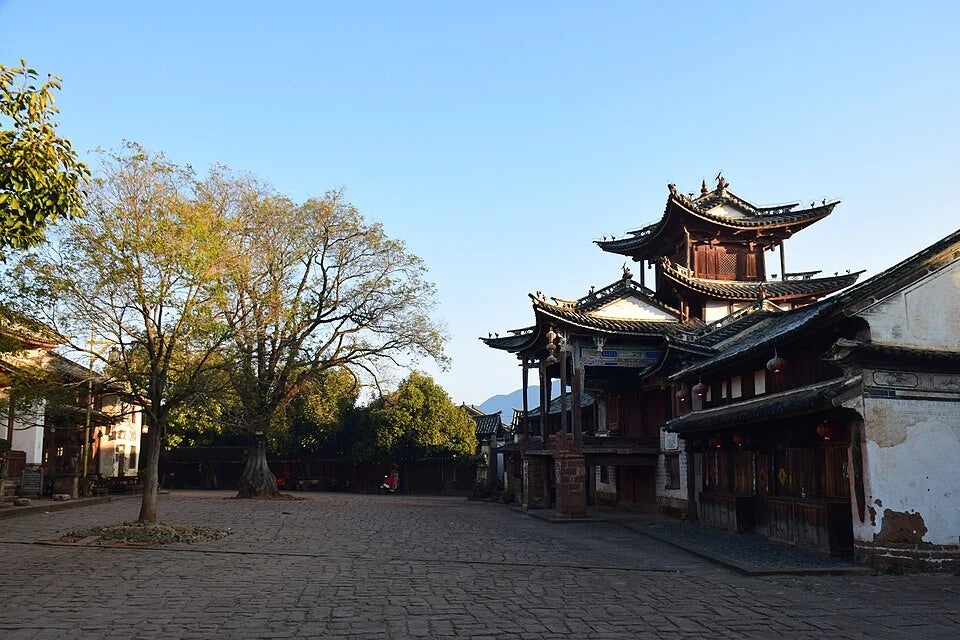
Sideng Street & Sifang Square
Red sandstone, old trees and old houses.
Photo: Lovethefish_cat · CC0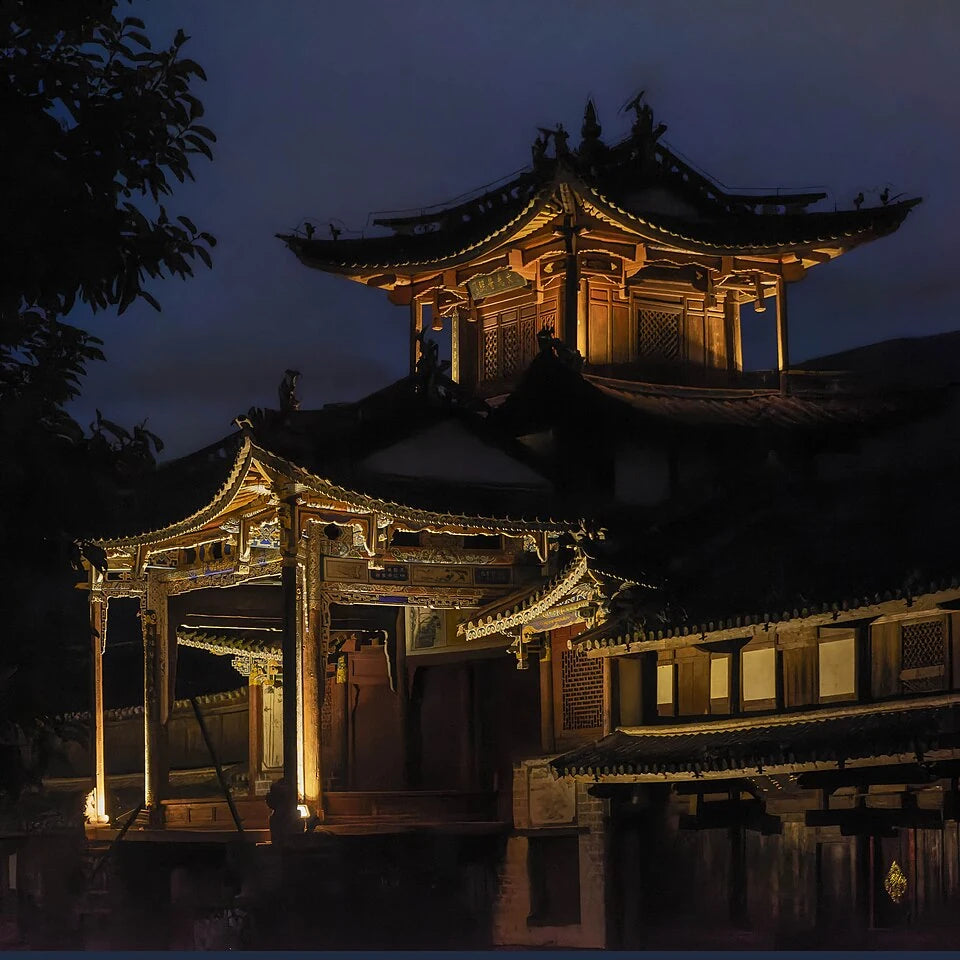
The old theatre stage & Kuixing Pavilion
A timber structure with three tiers of sweeping eaves.
Photo: Rod Waddington from Kergunyah, Australia · CC BY-SA 2.0
Xingjiao Temple
A Ming-era Bai temple and its murals.
Photo: eviltomthai · CC BY 2.0
Yujin Bridge
Sheep cross the stone arch through morning mist.
Photo: Rod Waddington from Kergunyah, Australia · CC BY-SA 2.0Caravan hoofprints and the people at market
02 stories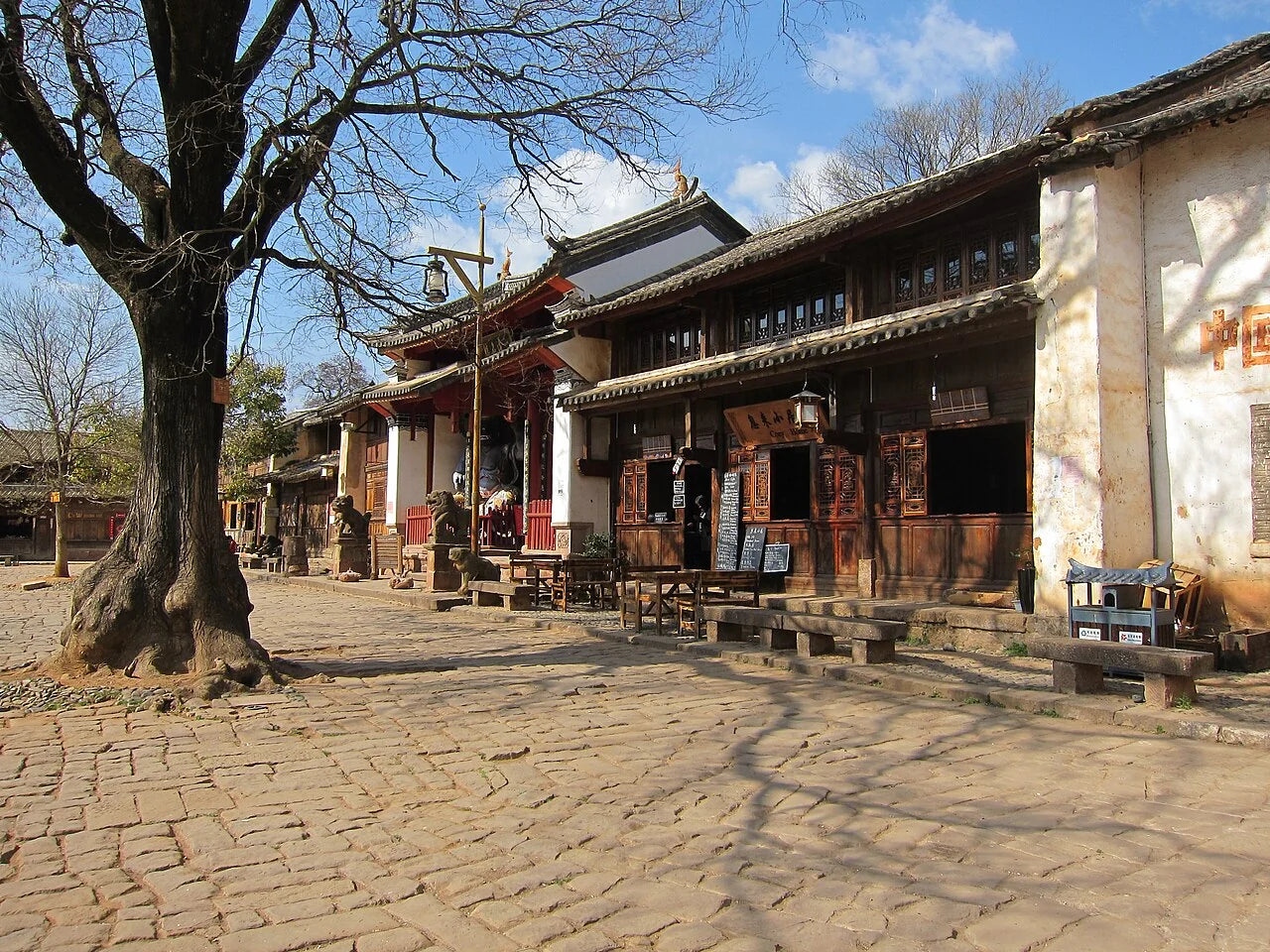
Where the caravans stopped to rest
Caravans carried tea, salt and cloth across the mountains, stopping at Sideng Street to rest, watch theatre and trade. Hoofprints remain in the paving stones. The rules and relationships of the muleteers form the origins of this market town.
Photo: Anders Johnson · CC BY 3.0Bawangbian before the stage
At festivals, Bai women perform the Bawangbian dance in front of the old stage, carrying painted bamboo batons that strike crisply as they move. The town’s celebrations are still performed by local people themselves.
Three flavours beside the hearth
03 tastes
Beef and wild mushrooms in clear broth
Beef simmers slowly in a copper pot on the hearth with seasonal wild mushrooms. Mint and roasted chilli accompany tender meat and fresh broth: a warming mountain meal.
Photo: Hhhlx · CC BY 4.0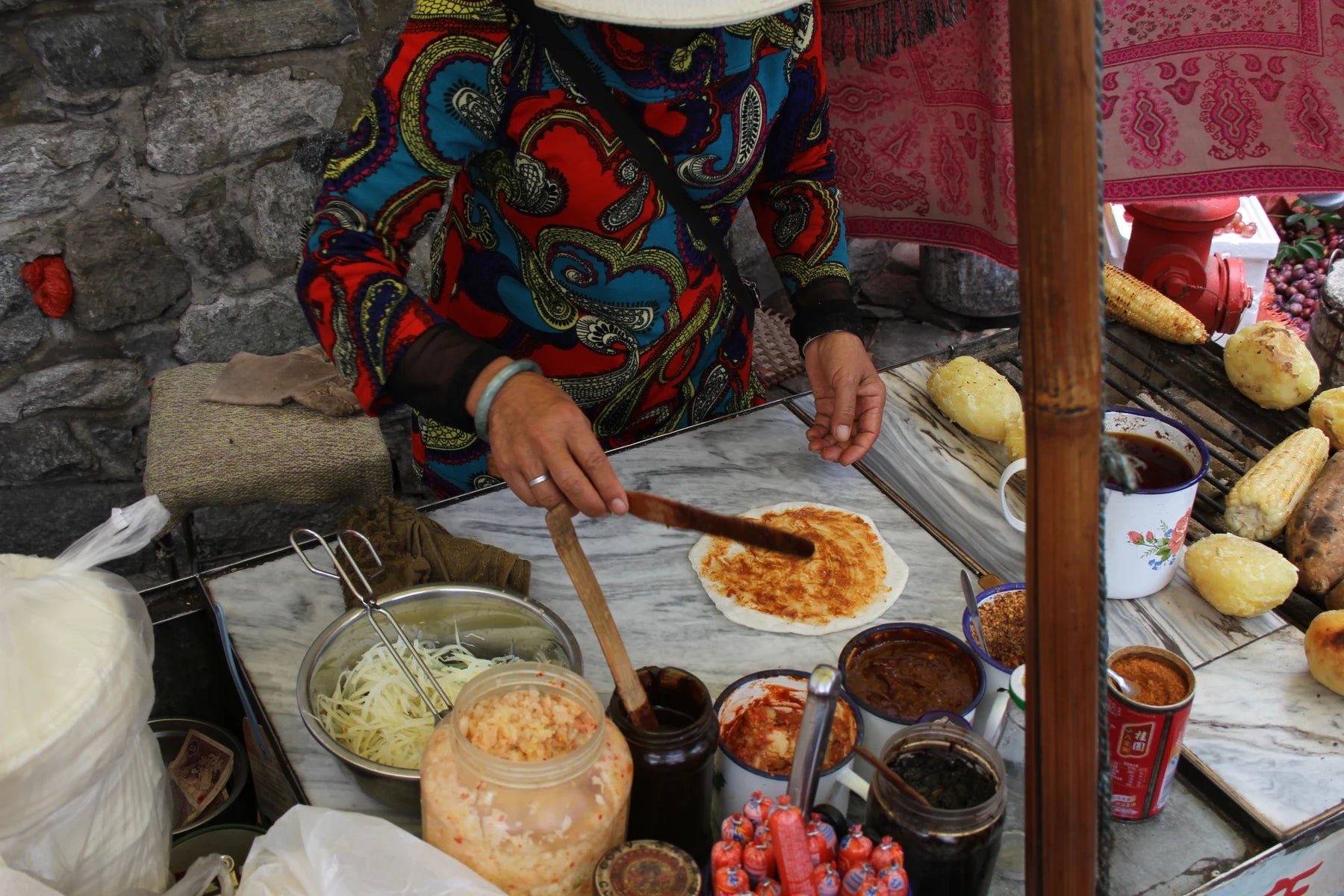
Hand-pressed erkuai rice cake
Steamed rice is worked by hand into rice cake, then grilled over charcoal until lightly toasted and brushed with sweet or spicy sauce. It is an old-town breakfast staple.
Photo: David Hall · CC BY 2.0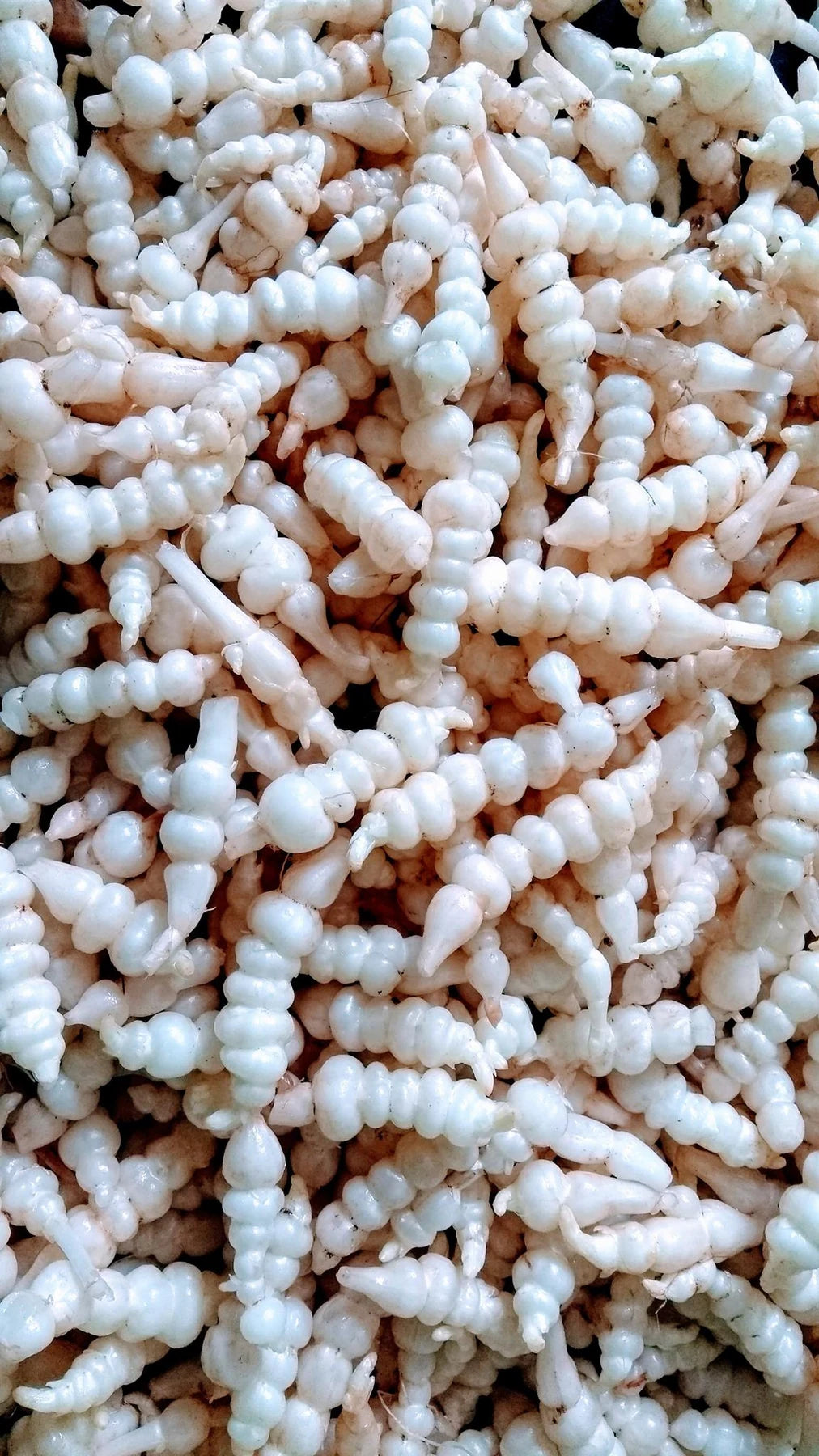
Fried mountain roots
Dishen, also called chongcao-shen in the source, is a mountain root vegetable. Fried golden and crisp, its flavour deepens as you chew. It is an unusual Shaxi snack.
Photo: Idéalités · CC BY-SA 4.0Jianchuan wood carving
Shaxi belongs to Jianchuan, whose wood carving is widely known. With a carving knife, artisans shape flowers, birds, landscapes and human stories into doors and windows, using layered openwork that reveals the skill in each cut.
Many of the town’s carved architectural details were made by these craftspeople.
Jianchuan (Shaxi), Dali · National intangible cultural heritage (traditional fine arts) · Craft passed on through wood and carving.The fourth and fifth days
Day 4 Xizhou → Shaxi
- Plan
- Travel to Shaxi and settle into the rhythm of an old Tea-Horse Road town.
- Transport
- Xizhou to Shaxi: journey time to be confirmed with the vehicle team.
- Stay
- Shaxi: Jixiashan · Shaxi Shiye or Shiran Shanshe in the old town.
Day 5 A deeper stay in Shaxi
- Plan
- Slow exploration of Shaxi. Depending on selected experiences, this day can be adjusted to a second night in Xizhou.
- Transport
- Local walking and short-distance journeys.
- Stay
- Shaxi: Jixiashan · Shaxi Shiye or Shiran Shanshe in the old town.
04Lijiang | Water through streets, writing as pictures
Waterways / old towns / Dongba / ancient musicLijiang · Water through streets, writing as pictures
Enter Naxi life through the old towns: water, lanes and a living pictographic script.
Lijiang’s old towns have grown with water: channels run through streets, with stone bridges and trailing willows. Dayan is lively, Shuhe quieter, and Baisha the oldest, facing Jade Dragon Snow Mountain. The Naxi people still write Dongba pictographs and play music passed down over centuries. Move in a day from bustle to quiet, and then towards the foot of the snow mountain.
Three old towns and a wall of murals
04 places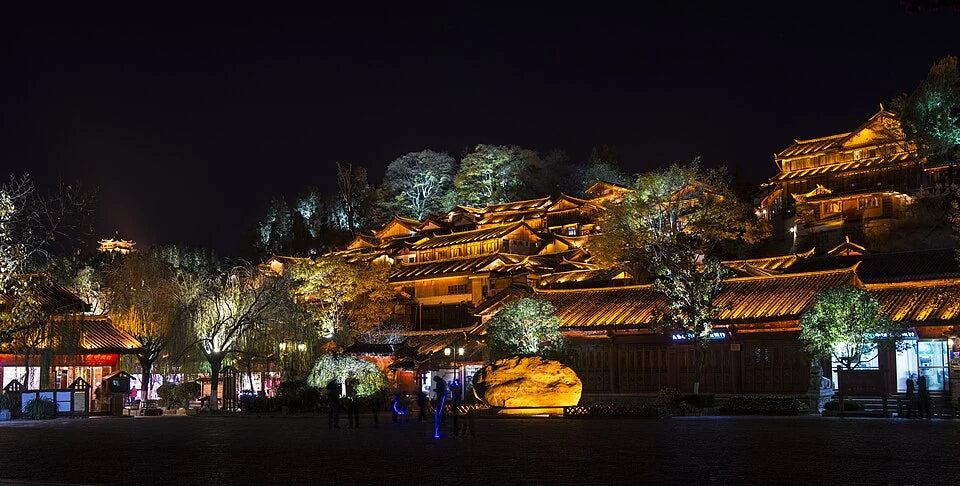
Dayan Old Town
Water channels, stone bridges and weeping willows.
Photo: chensiyuan · CC BY-SA 4.0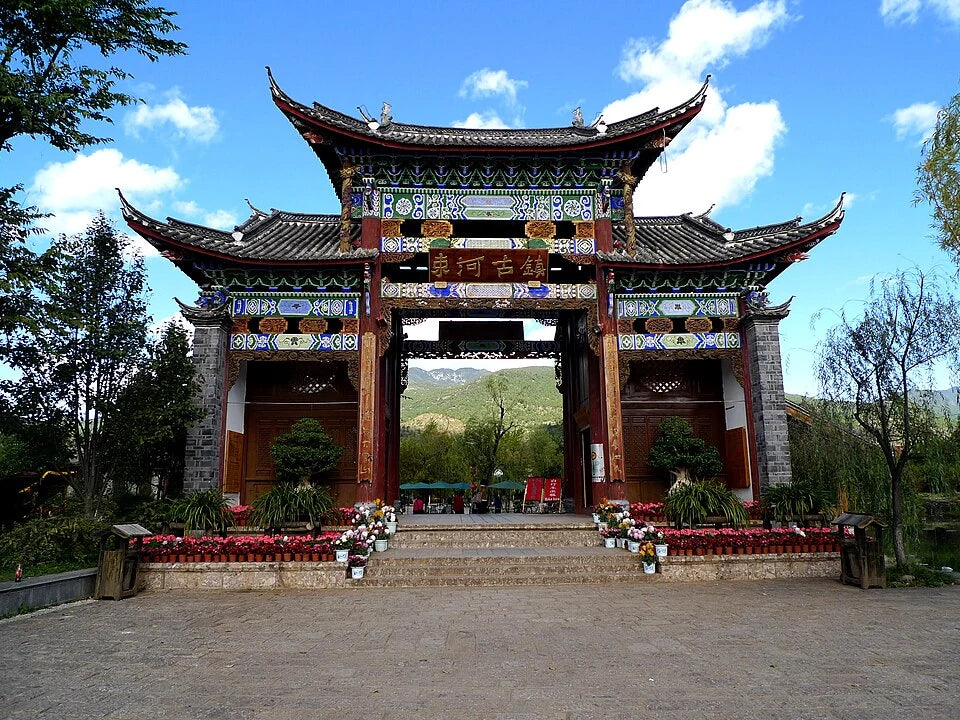
Shuhe Old Town
Qinglong Bridge and Jiuding Longtan spring.
Photo: Gisling · CC BY 3.0
Baisha Old Town
The oldest Naxi settlement, facing Jade Dragon Snow Mountain.
Photo: YunLore-authorized photography · Used with permission
Baisha murals
Ming-era works jointly painted within Han, Tibetan and Naxi traditions.
Photo: Yumeto · CC BY-SA 4.0Pictographs and the ancient music of the elders
02 stories
Dongba writing, still being written
Dongba is one of the few pictographic scripts still in use. Animals, people and everyday objects become signs on handmade Dongba paper. Dongba ritual specialists use it to record scriptures and conduct ceremonies; a character can be a picture.
Photo: Unknown authorUnknown author · Public domain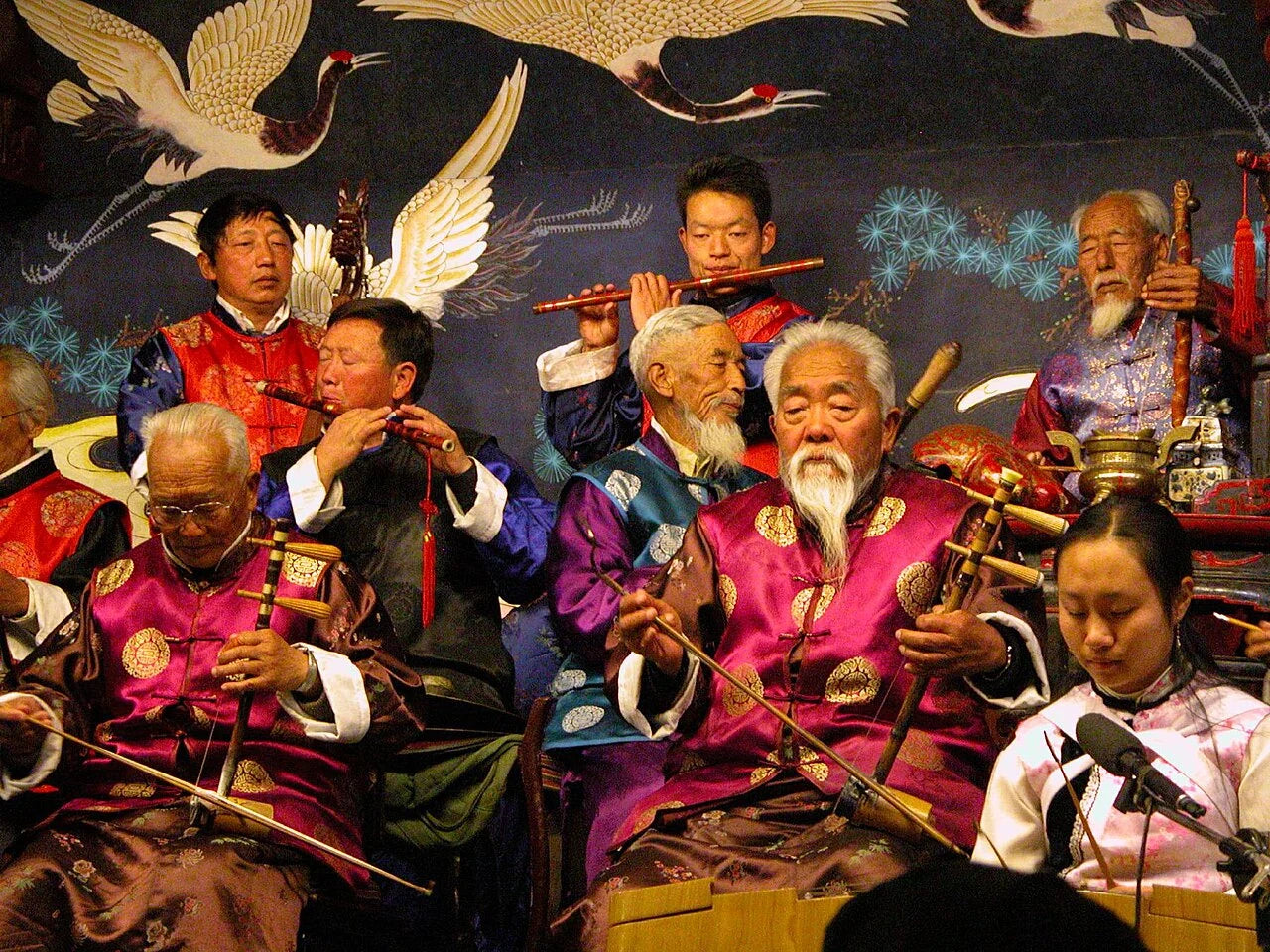
Three kinds of age in Naxi music
Naxi ancient music values old instruments, old compositions and elder musicians. Pipa, sugudu lutes and flutes carry the old melodies. Before the theatre stage, many players are white-haired. As a piece ends, time itself seems to have slowed.
Photo: Peter Morgan from Beijing, China · CC BY 2.0Three tastes of Lijiang
03 tastes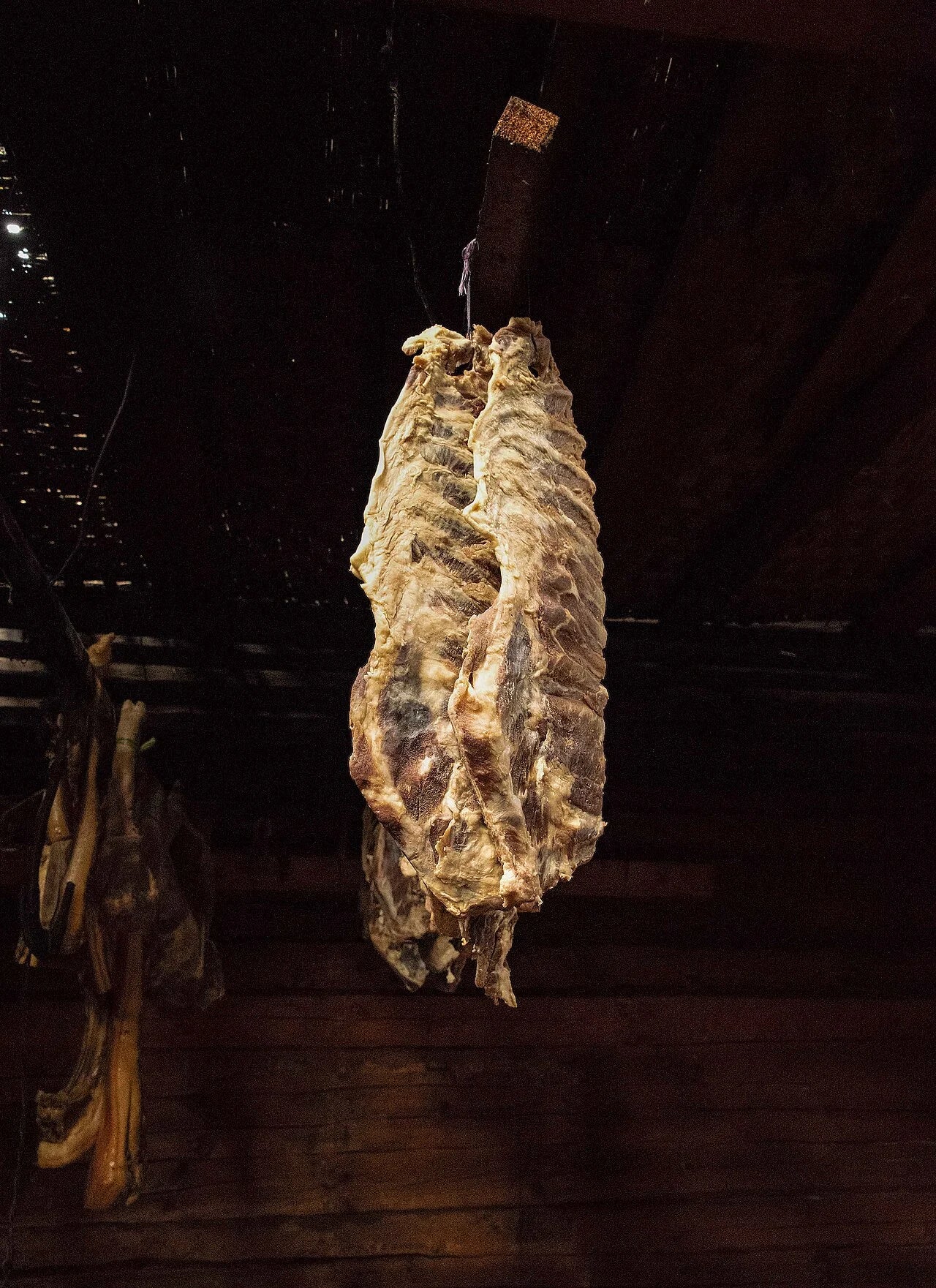
Cured pork-rib hot pot
Salted, air-dried ribs simmer in a clay pot with potatoes and greens. Savoury and deeply flavoured, a pot is especially warming on a cold, damp Lijiang evening.
Photo: Rod Waddington from Kergunyah, Australia · CC BY-SA 2.0
Jidou bean jelly
Dark-grey jelly made from local jidou beans is served cool with a sour-spicy dressing or pan-fried until lightly crisp. It is a street flavour Naxi people grow up with.
Photo: Kent Wang · CC BY-SA 2.0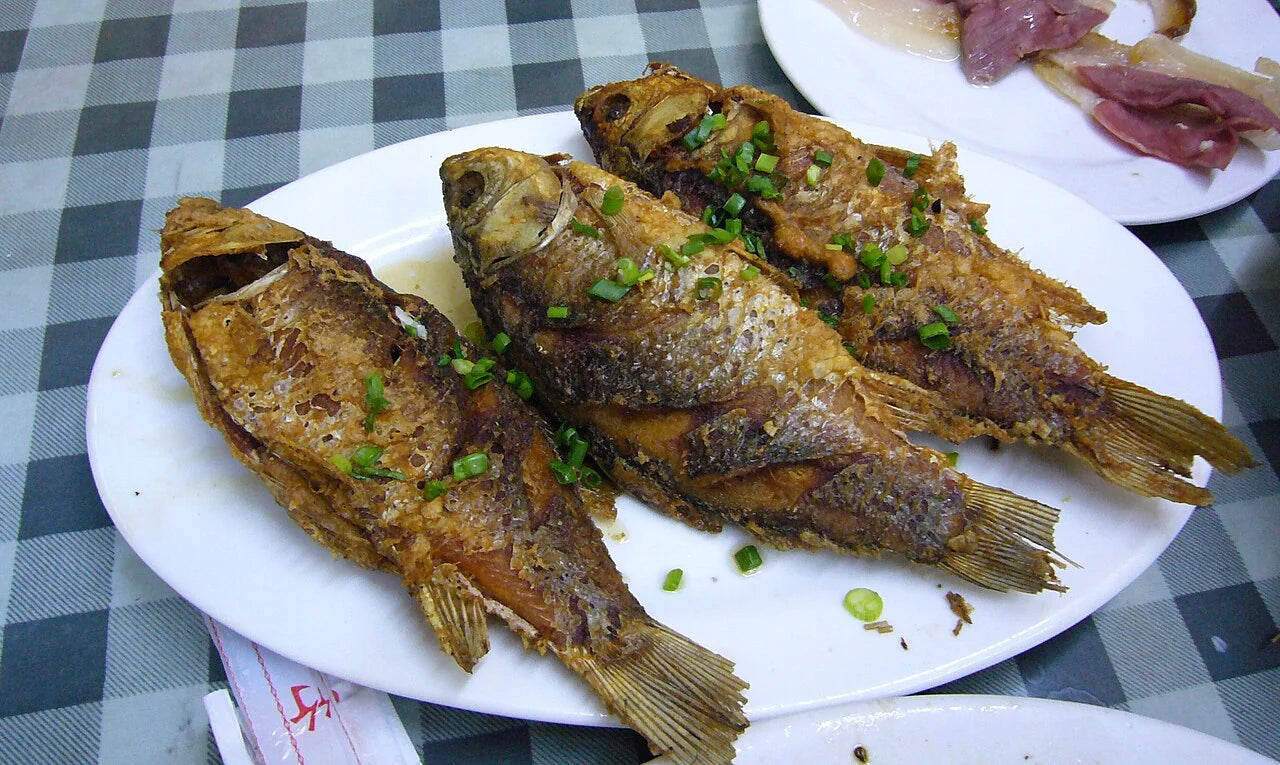
Naxi grilled fish
Seasoned fish stuffed with herbs is charcoal-grilled golden, crisp on the outside and tender within. A familiar dish by the water in the old town.
Photo: Kent Wang · CC BY-SA 2.0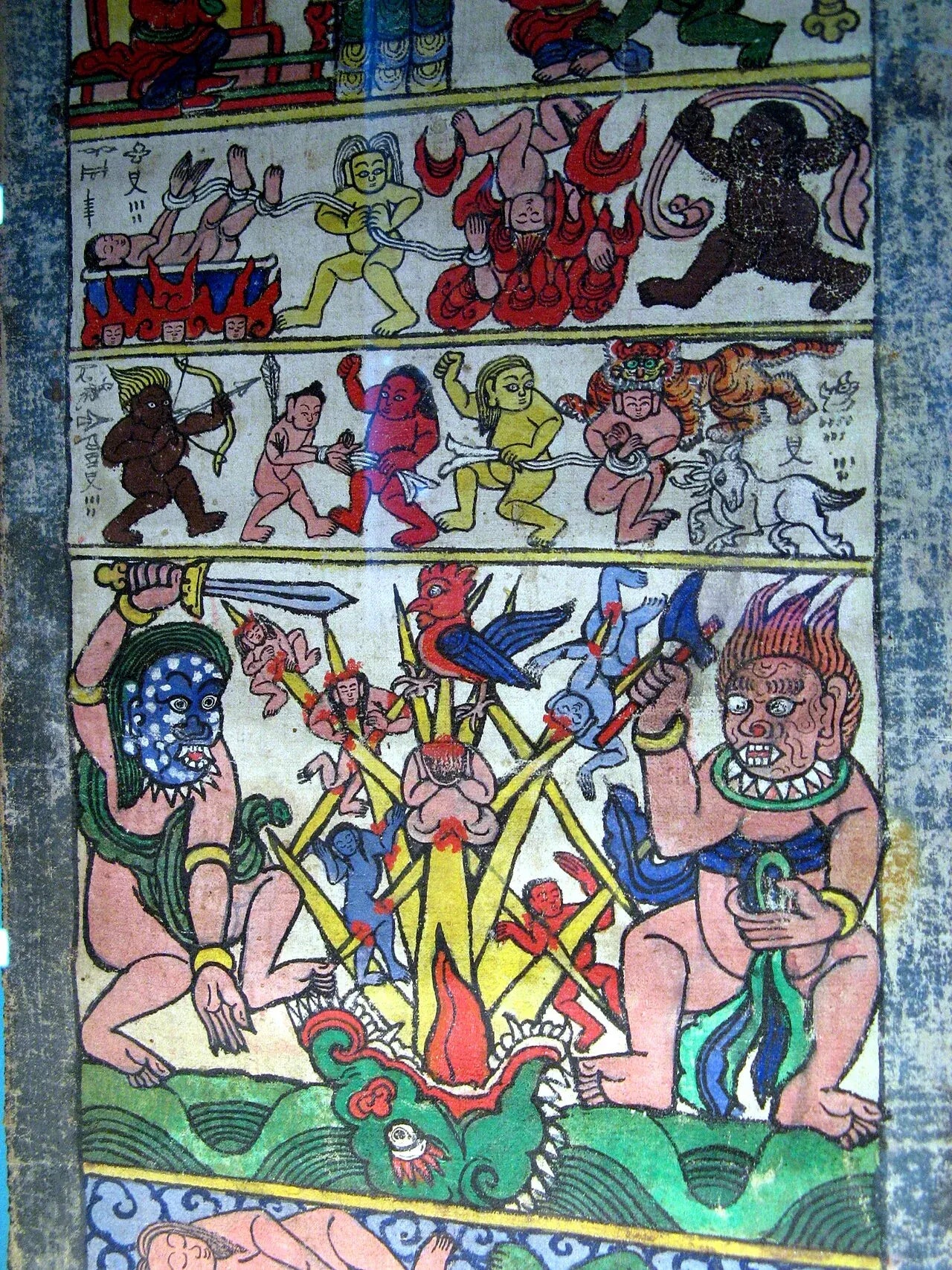
Naxi Dongba painting
Dongba painting carries Naxi Dongba culture, often on wooden tablets or cloth. Gods, birds, animals and people appear in strong colours and archaic forms.
Dongba manuscripts are also inscribed in UNESCO’s Memory of the World Register. They hold a Naxi understanding of the world and its living things.
Lijiang · National intangible cultural heritage (traditional fine arts) · Dongba manuscripts: Memory of the World.The sixth day
Day 6 Shaxi → Lijiang → Shuhe / Baisha
- Plan
- Arrive in Lijiang and visit Shuhe and Baisha old towns, organised around your accommodation area.
- Transport
- Shaxi to Lijiang: journey time to be confirmed with the vehicle team.
- Stay
- Shuhe: Jinmao Hotel Lijiang, in The Unbound Collection by Hyatt; Banyan Tree Lijiang; or Yichuan · Xingye. Baisha: Tian Naxi, Tingsong Yashe or Luye Songjian.
05Tiger Leaping Gorge | The river splits the mountains
Canyon / great river / walking / forceTiger Leaping Gorge · The river splits the mountains
Here, the journey meets the force of nature head-on.
The Jinsha River cuts a gorge between Jade Dragon and Haba snow mountains, striking Tiger Leaping Rock with a thunderous sound. Upper Gorge reveals its grandeur, Middle Gorge its steep drama, and the high trail takes you onto the mountainside facing the two snow peaks. Walking intensity is adjusted to the group; there is no need to push beyond your comfort. Safety always comes before scenery.
Four places in and around the gorge
04 places
Upper Tiger Leaping Gorge
Tiger Leaping Rock amid the surging river.
Photo: Tdxiang at English Wikipedia · Public domain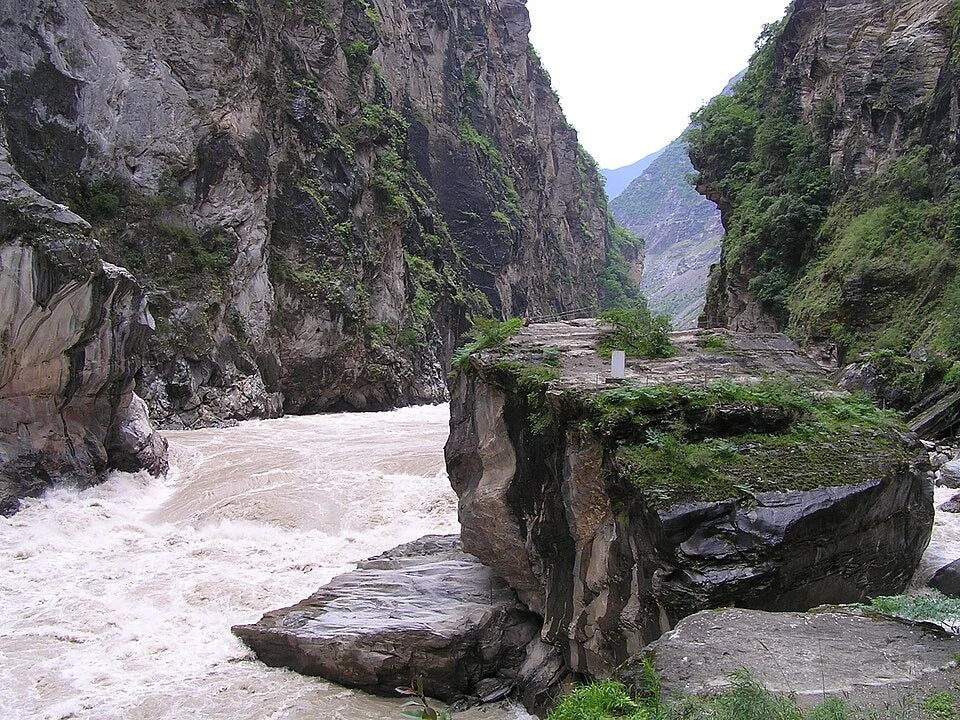
Middle Tiger Leaping Gorge
A narrow canyon and great boulders.
Photo: ogwen · CC BY-SA 3.0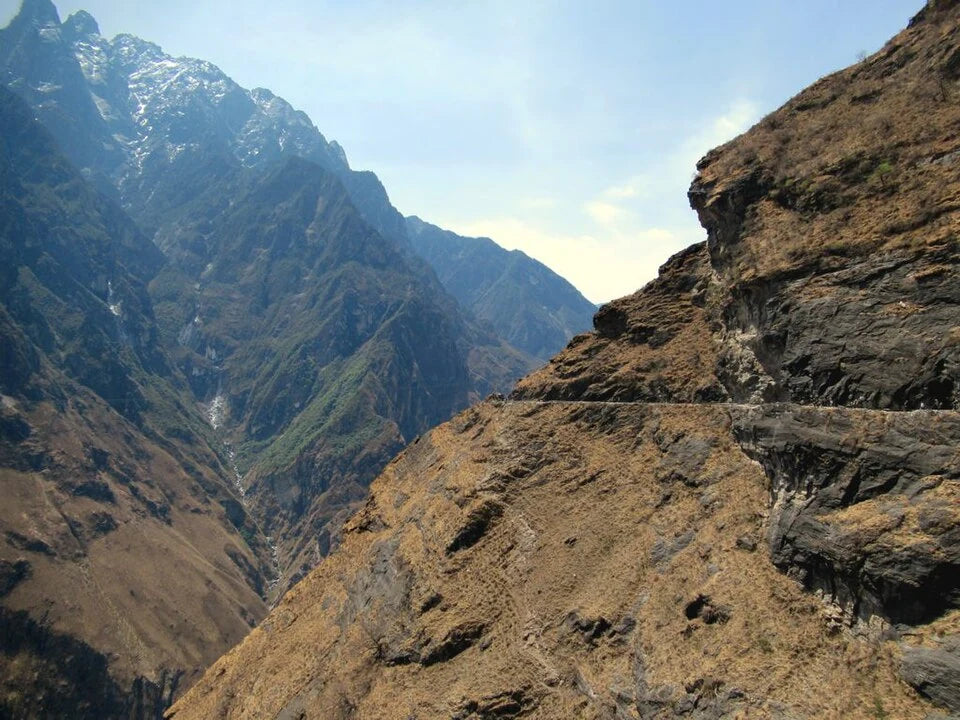
The high trail
A mountainside path facing the snow peaks.
Photo: David Stanley from Nanaimo, Canada · CC BY 2.0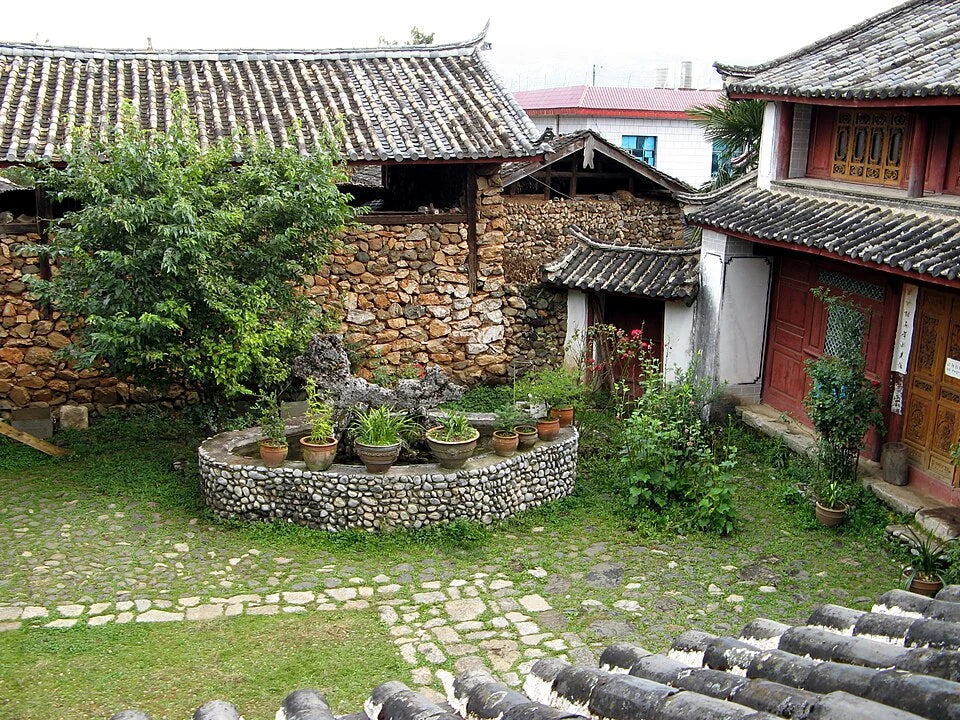
Yuhu Village
A stone village at the foot of the snow mountain.
Photo: G41rn8 · CC BY-SA 4.0A stone village and the guides of the gorge
02 storiesA stone village beneath the snow mountain
Naxi people built Yuhu with stone walls and stone roofs. It was an early home of the Mu ruling family and preserves the former residence of explorer Joseph Rock. Villagers still keep their lives at the foot of the snow mountain.
Local guides and pack mules
On the high trail, Naxi guides know the paths and changing weather best. Pack mules carry luggage ahead. Mountain guesthouses, a hearth and a cup of hot water are often kept by these same local people.
Two tastes from the gorge guesthouses
02 tastesNaxi charcoal-roasted pork
Local pork belly is seasoned and charcoal-roasted until the skin is crisp and golden, sliced and dipped in chilli. A hearty favourite at mountain guesthouses.
Hearth-cooked chicken hot pot
Free-range chicken simmers on the hearth with greens and mushrooms. After a day’s walking, gather around the pot and let the steam ease the tiredness.
The seventh day
Day 7 Baisha → Yuhu Village → Tiger Leaping Gorge
- Plan
- Continue through Yuhu Village into Tiger Leaping Gorge, with walking intensity tailored to the group.
- Transport
- Lijiang to Tiger Leaping Gorge: journey time to be confirmed with the vehicle team.
- Stay
- Tiger Leaping Gorge: Moye · Xueshan Xuanya, Wuyin Runting, Guanguan Di or Mijing Banshan.
06Shangri-La | Towards the open sky
Plateau / monasteries / meadows / beliefShangri-La · Towards the open sky
The final stage climbs higher, and suddenly the sky feels much wider.
Climbing from Tiger Leaping Gorge onto the plateau, the air cools and the clouds seem lower. Songzanlin’s golden roofs emerge through morning mist; Pudacuo’s lakes reflect the forest; cattle and sheep scatter across Napa Lake’s meadows. People turn prayer wheels, make prostrations and gather for circle dances. Belief is part of daily life. Slow down to let your body adjust to the altitude, and give your mind room to open too.
Four places on the plateau
04 places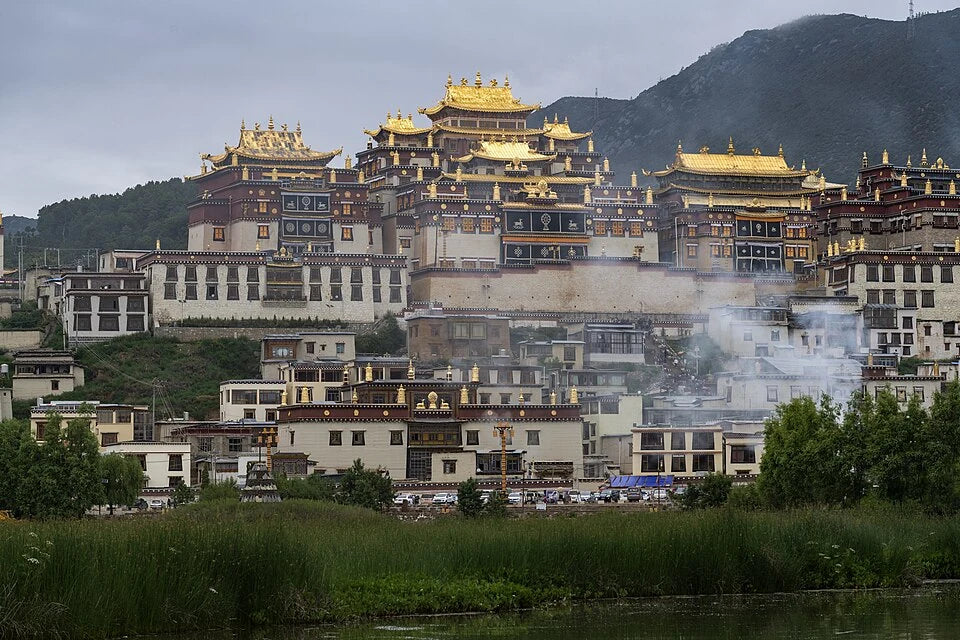
Songzanlin Monastery
Yunnan’s largest Tibetan Buddhist monastery, like a small Potala Palace in the morning mist.
Photo: Chensiyuan · CC BY-SA 4.0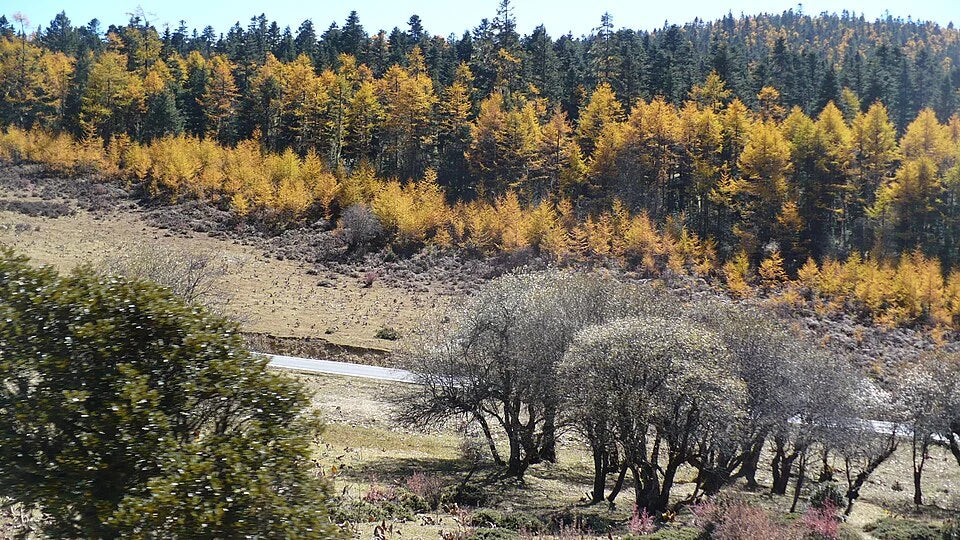
Pudacuo
Highland lakes, old-growth forest and wooden boardwalks.
Photo: Colin W · CC BY-SA 3.0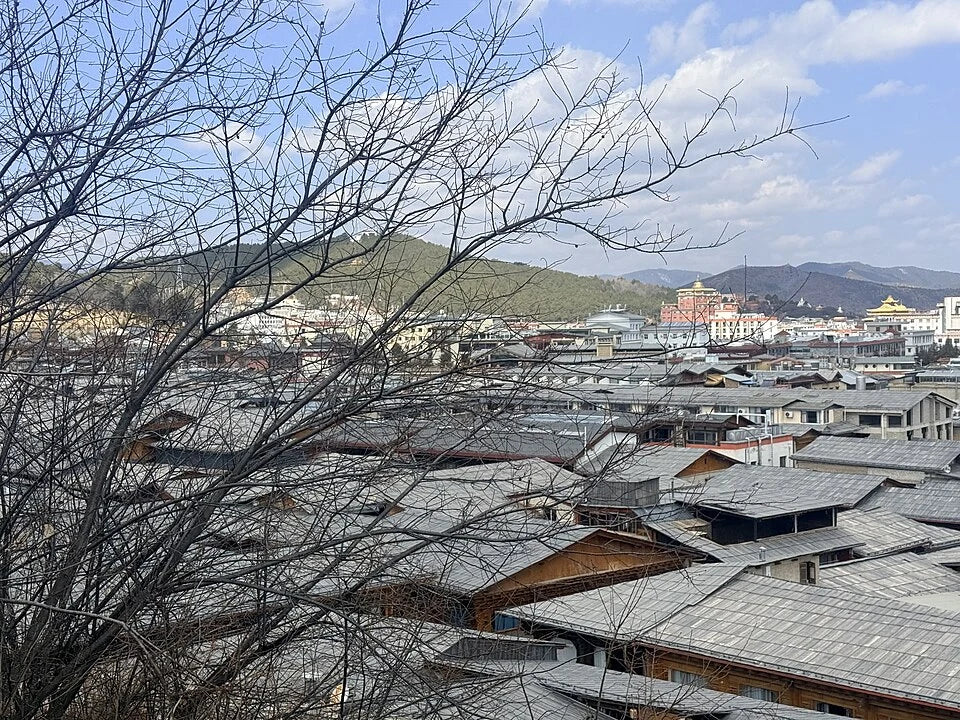
Dukezong Old Town
A vast bronze prayer wheel.
Photo: 祝鱼贵 · CC BY-SA 4.0
Napa Lake & Yila Grassland
A seasonal lake, open meadows, cattle and sheep.
Photo: 瑞丽江的河水 · CC BY-SA 4.0Prayer wheels and the evening circle dance
02 stories
Those who turn prayer wheels and make prostrations
Before the monastery, Tibetan residents walk circuits with prayer wheels; others arrive through long sequences of prostrations. Butter lamps burn steadily, and faces are calm. This belief is not elsewhere: it is in the steps taken every day.
Photo: YunLore-authorized photography · Used with permission
An evening guozhuang dance
At nightfall in the old-town square, people join hands and dance in a circle. Elders, children, locals and visitors share simple steps, round after round—a lively, warm gathering.
Photo: YunLore-authorized photography · Used with permissionThree tastes of the plateau
03 tastes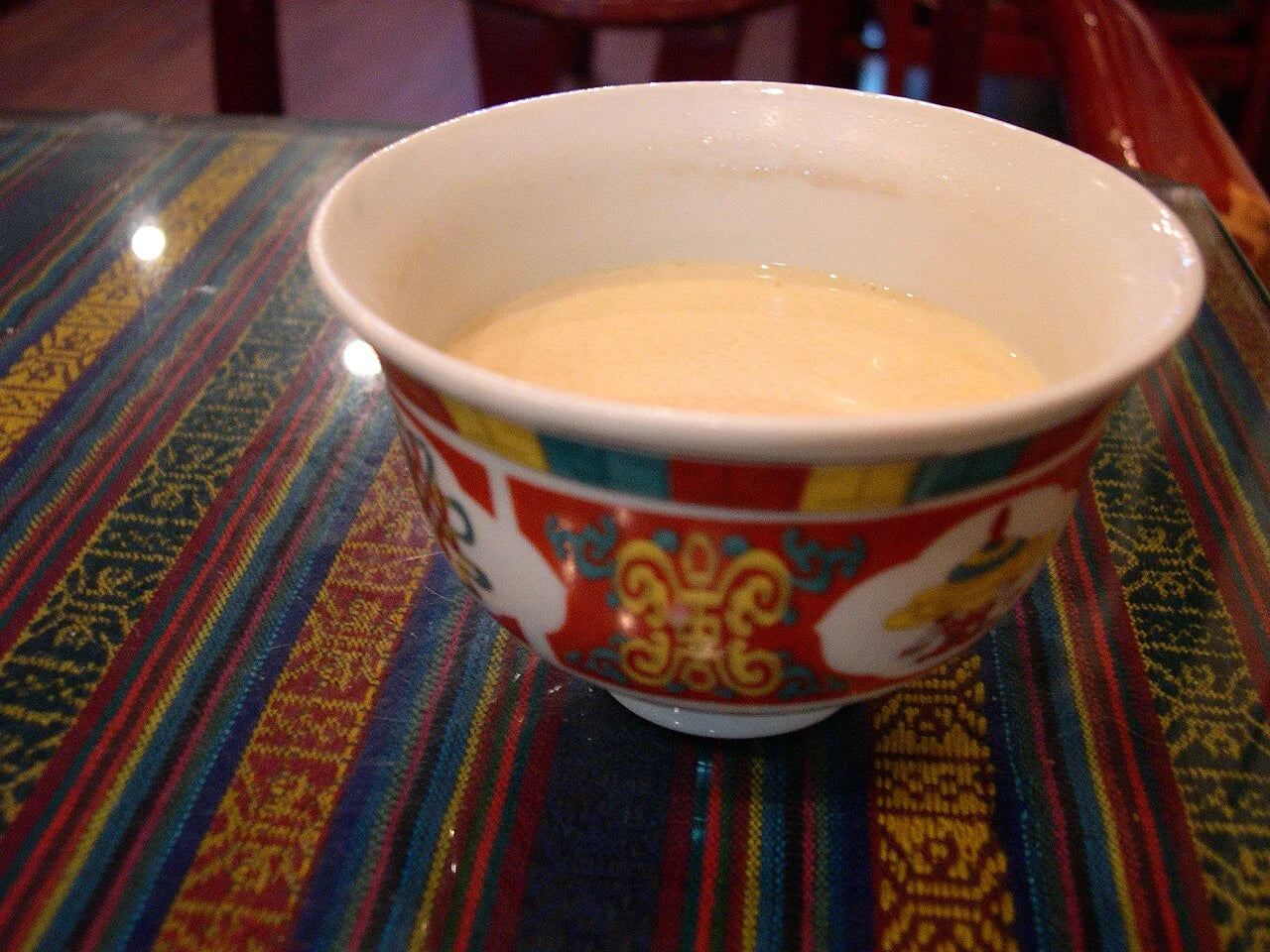
Tibetan dumplings & butter tea
Thin-skinned dumplings filled with yak meat and onion are juicy and served with a pot of savoury butter tea. A homely Tibetan welcome.
Photo: Yosomono · CC BY 2.0Yak hot pot
Highland yak meat simmers in an earthenware pot with plateau potatoes and wild greens. Richly flavoured and warming on a cold highland night.
Yak yoghurt
Fermented yak milk becomes yoghurt thick enough to hold a spoon. Intensely tangy, with a spoonful of honey, it is one of the plateau’s simplest sweets.
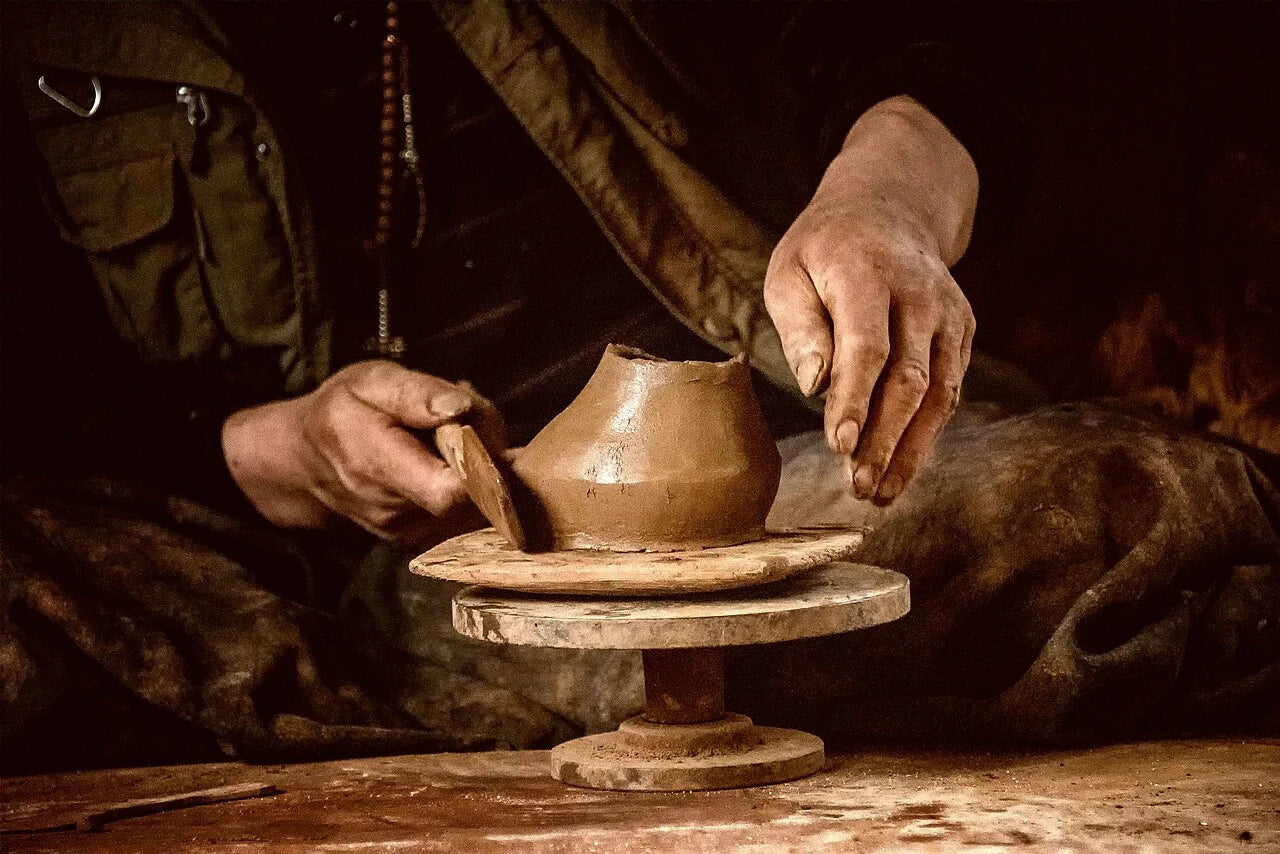
Nixi Tibetan black pottery
Nixi’s Tibetan black pottery is shaped entirely by hand, using paddling and pinching rather than a wheel. Its dark, lustrous pieces are plain, durable and deeply practical.
Cooking pots, teapots and butter-tea vessels found at Tibetan hearths come from this craft, and are still used to boil water and cook meals today.
Nixi Township, Shangri-La, Diqing · National intangible cultural heritage (traditional craftsmanship) · Hand-shaped pottery for the hearth and everyday life.The eighth and ninth days
Day 8 Tiger Leaping Gorge → Shangri-La
- Plan
- Climb onto the plateau and arrive in Shangri-La. Rest after arrival and allow time to acclimatise.
- Transport
- Tiger Leaping Gorge to Shangri-La: journey time to be confirmed with the vehicle team.
- Stay
- Shangri-La: Shili Xueshan + Banshan Tanye, Boxin Yunshe, Mai Acong Ruyi · Fanjing Tibetan Villas, or Puyuan Xueye.
Day 9 An unhurried day in Shangri-La
- Plan
- Explore monasteries, lakes and the old town at an intensity suited to altitude acclimatisation.
- Transport
- Local short-distance journeys; detailed timings to be arranged.
- Stay
- Shangri-La: Shili Xueshan + Banshan Tanye, Boxin Yunshe, or Mai Acong Ruyi · Fanjing Tibetan Villas.
07The way back | Return to the everyday
Looking back / afterglow / farewell
From the waters of Dali to the skies of Shangri-La, then back to life.
From Dali’s water to Shangri-La’s sky, then back to the everyday.
Northwards and upwards, then back down again. Landscapes, old towns, the great river and the plateau fall behind you, but leave a more concrete feeling: how people make a good life between mountains and water.
Day 10 Shangri-La → Lijiang → Airport departure
- Plan
- Return to Lijiang for airport drop-off, leaving a buffer for roads and security. An early flight requires an additional buffer night in Lijiang.
- Transport
- Shangri-La to Lijiang: journey time to be confirmed with the vehicle team. Departure is planned backwards from the flight.
- Stay
- No overnight stay is arranged for this day.
Why this journey
Four things to take with you
01 How landscape enters daily life
Bai courtyards and screen-wall homes in Dali and Xizhou reveal how landscape, community and belief become three daily meals and a courtyard.
02 A pause on the Tea-Horse Road
Sideng Street in Shaxi, the surviving old caravan market: hearths, muleteers and time slowing down.
03 The force of river and canyon
The Jinsha River divides the snow mountains at Tiger Leaping Gorge. See the grandeur of Upper Gorge and the high trail, with activity levels adjusted to the group.
04 The openness of the plateau
In Shangri-La, monasteries, lakes, meadows and people turning prayer wheels reveal life at a different altitude.
What is included
Costs & inclusions
A tailored quotation for your group
Pricing is calculated according to your travel dates, group size and hotel selection. Please enquire for an itemised proposal.
Included
- A comfortable seven-seat business vehicle throughout, with a driver familiar with the route, fuel and road tolls.
- Nine nights in the listed hotels or comparable guesthouses, according to the confirmed proposal.
- Dali airport collection, Lijiang airport drop-off and railway-station transfers specified in the itinerary.
- Journey planning and local coordination throughout.
Not included
- Flights or train tickets to and from Dali and Lijiang, using different arrival and departure gateways.
- Meals throughout, except breakfasts included by the hotel.
- Attraction admission tickets and in-attraction experiences.
- Personal spending, optional activities and single-room supplements.
- Any expense not expressly listed under Included.
This is an outline of the cost structure. Final inclusions, prices, change and cancellation terms are subject to the itinerary and contract confirmed by both parties.
Before you go
A few things to know
Your vehicle
One seven-seat business vehicle throughout. Times are indicative and subject to roads, weather and fleet arrangements. Leave a generous buffer for the Day 10 return to Lijiang airport.
Altitude & walking
Tiger Leaping Gorge walking is adapted to the group: stay within your limits. At higher-altitude Shangri-La, slow down after arrival, keep warm and rest. Inform the team promptly if you feel unwell.
Accommodation & clothing
Hotels are comparable candidates, subject to availability at booking. Highland temperatures vary considerably between day and night. Bring sun protection, a warm outer layer and comfortable walking shoes.
Not just a journey. A way into life.
Step into the life of this land
Every place has its own way.
Photography credits & licenses
Real photographs, resized and cropped for this page. Each adapted photograph remains under its indicated license. Travel descriptions are retained where no verified matching photograph is available.
- 大理古城烧饵块.jpg — David Hall · CC BY 2.0 · resized / displayed with crop
- Erhai Lake in 2023.jpg — Nishino Asuka · CC BY-SA 4.0 · resized / displayed with crop
- Tree in front of Erhai Lake.jpg — Mx. Granger · CC0 · resized / displayed with crop
- Dali Cangshan - 17048508557.jpg — ZhaoScorpio · CC BY-SA 2.0 · resized / displayed with crop
- Xizhou Old Town.jpg — Mx. Granger · CC0 · resized / displayed with crop
- Former Residence of Yan Zizhen 092 2017-09.jpg — 猫猫的日记本 · CC BY-SA 4.0 · resized / displayed with crop
- Yujin Bridge (47049424394).jpg — Rod Waddington from Kergunyah, Australia · CC BY-SA 2.0 · resized / displayed with crop
- 1 lijiang old town night.jpg — chensiyuan · CC BY-SA 4.0 · resized / displayed with crop
- 丽江束河古镇.JPG — Gisling · CC BY 3.0 · resized / displayed with crop
- Upper Trekking Route (48387200056).jpg — David Stanley from Nanaimo, Canada · CC BY 2.0 · resized / displayed with crop
- Middle Tiger Leaping Gorge - panoramio.jpg — ogwen · CC BY-SA 3.0 · resized / displayed with crop
- Lijiang Oct 2007 232.jpg — G41rn8 · CC BY-SA 4.0 · resized / displayed with crop
- 1 songzanlin monastery yunnan 2018.jpg — Chensiyuan · CC BY-SA 4.0 · resized / displayed with crop
- 1 songzanlin 2018a.jpg — Chensiyuan · CC BY-SA 4.0 · resized / displayed with crop
- Potatso (Pudacuo) National Park, Diqing - panoramio.jpg — Colin W · CC BY-SA 3.0 · resized / displayed with crop
- Dali Rushan.jpg — rduta · CC BY 2.0 · resized / displayed with crop
- 沙溪兴教寺戏台-2570280.jpg — Lovethefish_cat · CC0 · resized / displayed with crop
- 20260225 Skyline of Dukezong Ancient Town Shangri-La 08.jpg — 祝鱼贵 · CC BY-SA 4.0 · resized / displayed with crop
- 纳帕海 - 2025-05-07 02.jpg — 瑞丽江的河水 · CC BY-SA 4.0 · resized / displayed with crop
- 喜洲古镇-宝成府 2025-02-10 02.jpg — Kcx36 · CC BY-SA 4.0 · resized / displayed with crop
- Shaxi Theater (52388211885).jpg — Rod Waddington from Kergunyah, Australia · CC BY-SA 2.0 · resized / displayed with crop
- Tiger Leaping Gorge, December 2006.JPG — Tdxiang at English Wikipedia · Public domain · resized / displayed with crop
- 丽江鸡豌豆凉粉 - Chicken pea jelly.jpg — Kent Wang · CC BY-SA 2.0 · resized / displayed with crop
- 豌豆粉.jpg — 瑞丽江的河水 · CC BY-SA 4.0 · resized / displayed with crop
- 大理喜洲扎染.jpg — Kcx36 · CC BY-SA 4.0 · resized / displayed with crop
- The Three Pagodas in Dali at sunset.webp — YunLore-authorized photography · Used with permission · resized / displayed with crop
- Rice fields and Bai architecture near Dali.webp — YunLore-authorized photography · Used with permission · resized / displayed with crop
- Baisha Old Town beneath the mountains.webp — YunLore-authorized photography · Used with permission · resized / displayed with crop
- An evening gathering in Shangri-La.webp — YunLore-authorized photography · Used with permission · resized / displayed with crop
- The prayer wheel in Dukezong Old Town.webp — YunLore-authorized photography · Used with permission · resized / displayed with crop
- Shaxi Village - panoramio.jpg — Anders Johnson · CC BY 3.0 · resized / displayed with crop
- Naxi manuscript (right) 2088.jpg — Unknown authorUnknown author · Public domain · resized / displayed with crop
- Naxi Musicians I.jpg — Peter Morgan from Beijing, China · CC BY 2.0 · resized / displayed with crop
- Fried fish of Lijiang.jpg — Kent Wang · CC BY-SA 2.0 · resized / displayed with crop
- Benzhu Sanxing, Dali, Yunnan.jpg — G41rn8 · CC BY-SA 4.0 · resized / displayed with crop
- 水性杨花.jpg — Mx. Granger · CC0 · resized / displayed with crop
- Festival Time in Dali (48418711482).jpg — David Stanley from Nanaimo, Canada · CC BY 2.0 · resized / displayed with crop
- 喜洲圆角楼.jpg — Yangpeifu · CC0 · resized / displayed with crop
- Xizhou baba.jpg — Mx. Granger · CC0 · resized / displayed with crop
- Lijiang Oct 2007 225.jpg — G41rn8 · CC BY-SA 4.0 · resized / displayed with crop
- Salted Pork (44101585104).jpg — Rod Waddington from Kergunyah, Australia · CC BY-SA 2.0 · resized / displayed with crop
- Tibetan butter tea.jpg — Yosomono · CC BY 2.0 · resized / displayed with crop
- Tibetan Nixi Potter (33183559198).jpg — Rod Waddington from Kergunyah, Australia · CC BY-SA 2.0 · resized / displayed with crop
- Dabaoji Gong.jpg — Yumeto · CC BY-SA 4.0 · resized / displayed with crop
- 大理才村的洱海 05.jpg — Liuxingy · CC BY-SA 4.0 · resized / displayed with crop
- Mushroom hot pot in Yunnan.jpg — Hhhlx · CC BY 4.0 · resized / displayed with crop
- 凉米线 Rice Noodles with Cold Spicy Garlic Sauce and Peanuts - Laomeng Market (2372533413).jpg — Alpha from Melbourne, Australia · CC BY-SA 2.0 · resized / displayed with crop
- Yunnan xingjiao temple.jpg — eviltomthai · CC BY 2.0 · resized / displayed with crop
- Crosnesdujapon.jpg — Idéalités · CC BY-SA 4.0 · resized / displayed with crop
- 喜洲古镇-宝成府 2025-02-10 01.jpg — Kcx36 · CC BY-SA 4.0 · resized / displayed with crop